

Reclaim the Immersive Bubble
A music festival is an exercise in focus. You’re surrounded by sound, energy, and thousands of people all dialed into the same moment. At home, it’s a different story. The dog is barking, your phone is buzzing, and the sounds of your neighborhood are
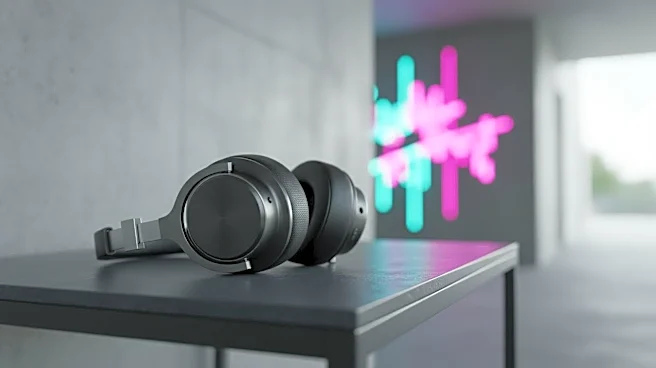
a constant distraction. Headphones are the simplest way to reclaim that immersive bubble. By physically blocking out the world, a good pair of over-ear headphones creates a personal listening environment. Suddenly, the festival isn't just background noise on your TV; it’s the main event. This isn't just about noise cancellation, though that helps. It’s about creating a psychological barrier that lets your brain fully commit to the experience, much like being in the middle of a field, surrounded by the stage and the crowd.
Hear the Music as It Was Mixed
Your television's built-in speakers are, to put it mildly, not designed for music. They’re built to make dialogue clear, not to reproduce the thunderous bass of a drum machine or the delicate shimmer of a cymbal. When engineers mix the audio for a festival livestream, they are often doing so with the assumption that many viewers will be listening on headphones. This means they are crafting a detailed, stereo-rich soundscape filled with nuances. Played through TV or laptop speakers, this intricate mix gets flattened into an audio pancake. Headphones, however, unlock that detail. You can suddenly hear the guitarist’s fingers on the fretboard, the subtle reverb on the vocalist’s mic, and the distinct placement of instruments across the stereo field. It’s the difference between looking at a postcard of the Grand Canyon and actually standing on the edge.
Unlock the Magic of Spatial Audio
This is where things get truly futuristic. Technologies like Dolby Atmos Music and Apple’s Spatial Audio are fundamentally changing how we experience sound. Instead of a simple left-right stereo mix, spatial audio treats sounds as individual objects that can be placed anywhere in a three-dimensional space around you. When a festival stream is mixed for this format, the effect is uncanny. The music isn’t just in your ears; it’s happening around you. The roar of the crowd might feel like it’s coming from behind, while the lead synth line soars overhead. This technology, delivered through compatible headphones, can create a sense of depth and realism that standard stereo simply can’t match. It’s the closest you can get to the feeling of being physically present at the venue, with sound washing over you from all directions.
The Ultimate Front-Row Seat
At a real festival, your audio experience is a lottery. You might be stuck next to the person who insists on talking through your favorite song, or positioned where the bass muddies the entire mix. With headphones, you are the master of your own audio destiny. You get a perfect, studio-approved mix every single time. It’s a purely democratic, VIP experience. There are no bad seats in your living room. This allows for a different, more intimate connection with the music. You can close your eyes and be completely enveloped by the performance, catching every detail without distraction. It transforms passive viewing into active, focused listening, giving you a front-row seat with a soundboard-quality feed, a privilege reserved for a select few in the real world.
It’s More Than Just Big Cans
The type of headphone you choose can further customize the experience. While noise-canceling models are great for blocking out a chaotic home environment, they aren't the only option. Open-back headphones, for example, are prized by audiophiles for their natural, spacious sound. They don't isolate you as much, but they create a wider, more speaker-like soundstage that can feel less restrictive. On the other hand, in-ear monitors (IEMs), the kind musicians often wear on stage, offer incredible detail and isolation. The point isn’t that one type is definitively better, but that you have the power to curate your sonic environment in a way that simply isn’t possible with a traditional speaker setup.