







First, What Exactly is Piping?
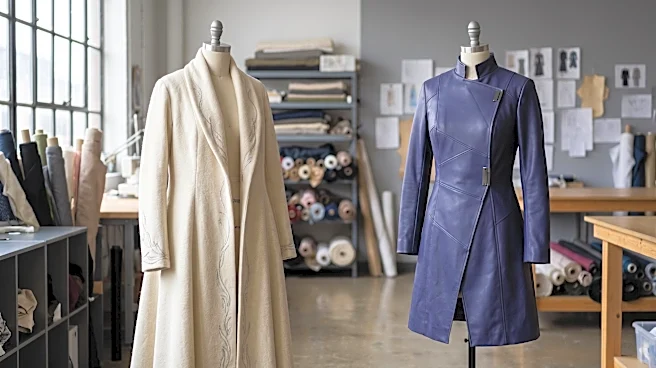
At its most basic, piping is a tailoring technique where a strip of fabric is folded over a cord and sewn into a seam. You’ve seen it on decorative pillows and upholstery, where it creates a clean, defined edge. In clothing, it serves a similar purpose,
historically used to reinforce seams and define the shape of a garment, from 19th-century bodices to military uniforms. It’s a small addition that requires extra time and skill, creating a three-dimensional line that subtly elevates the construction of any piece. When applied to costume design, this seemingly minor detail carries a huge amount of visual information.
The Power of a Simple Line
Our brains are wired to interpret lines. Vertical lines can create an illusion of height and formality, while horizontal lines can suggest width. Diagonal lines feel dynamic and energetic. In costume design, piping weaponizes this basic principle of visual psychology. By tracing the contours of the body or creating new geometric shapes, piping provides structure where there might otherwise be none. It guides the viewer's eye, drawing attention to the form of the actor and creating a silhouette that feels intentional and engineered. A simple jumpsuit becomes a uniform; a piece of fabric becomes a piece of technology.
An Iconic Trick of the Trade
You can chart the evolution of sci-fi aesthetics just by following the piping. The most famous example is arguably 'Star Trek,' where piping and color have been used for decades to denote rank and division. In 'Star Trek: Enterprise,' colored piping on the shoulders of the blue jumpsuits designated a crew member's department. Later series used it to differentiate entire uniform styles, signaling a shift in technology and tone. But perhaps no film used piping more literally than 'Tron' and its sequel, 'Tron: Legacy.' There, the glowing lines weren't just decorative; they were the circuitry of the digital world, integrated directly into the suits. The costumes, made of spandex and foam with electroluminescent tape, turned the actors themselves into pieces of living hardware.
Why It Reads as ‘Expensive’
The perception of expense often comes down to the appearance of complexity and care. A flat, seamless piece of clothing reads as simple and, therefore, potentially cheap. Piping, however, signals that a garment was constructed with precision. It breaks up large, plain surfaces, adding texture and depth that suggest a higher quality of manufacturing. This detail implies that the world the character inhabits is advanced enough to produce such tailored, functional-looking attire. It separates the hero’s uniform from a store-bought Halloween costume. In a practical sense, it’s also more work for the costume department, representing a greater investment of time and resources. Subconsciously, we register this effort. The lines suggest structure, technology, and a perfect fit — all hallmarks of something valuable and purpose-built, not mass-produced.