







What Was the 'Hail Mary' Mission?
The nickname fits. NASA's OSIRIS-REx mission was a seven-year, billion-dollar journey to a near-Earth asteroid named Bennu, a 4.5-billion-year-old remnant from the dawn of the solar system. The goal: do something the U.S. had never done before—grab a sample
from an asteroid and bring it home. This wasn't just a rock-collecting trip. Bennu is a carbon-rich time capsule, believed to hold the pristine chemical building blocks of life. Getting there was hard, but the real 'Hail Mary' pass was the sample collection itself. In 2020, the spacecraft descended toward Bennu and, in a maneuver called "Touch-And-Go," it essentially gave the asteroid a high-five with a robotic arm to collect dust and rock. The stakes were immense; one wrong move and the entire mission could have failed, leaving scientists with nothing but cosmic dust on their space suits.
The Moment It Almost Went Wrong
The collection was almost too successful. The spacecraft’s collection head punched into Bennu’s surprisingly soft surface and gathered so much material that rocks became wedged in the container's lid, jamming it partially open. Precious, irreplaceable black dust from the asteroid began leaking out into space. For a mission where the entire goal was to bring that material back, it was a heart-stopping crisis. Engineers on Earth scrambled, quickly altering plans to stow the sample head securely in its return capsule—the cylinder—years ahead of schedule. It was a tense, delicate operation performed via remote control from millions of miles away, but it worked. The precious cargo was sealed away for its long journey back to Earth, arriving in the Utah desert in September 2023.
Enter: The Cylinder
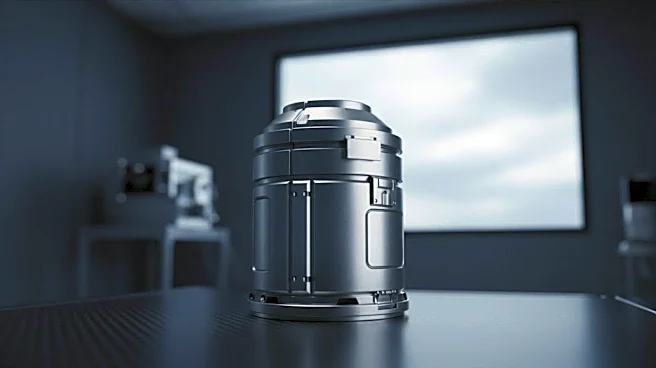
This is where the cylinder takes center stage. Officially known as the Sample Return Capsule, this piece of hardware is far more than a simple container. It’s a marvel of engineering designed for one purpose: to protect its priceless contents. After being released by the main spacecraft, it hurtled through Earth's atmosphere at incredible speeds, enduring scorching temperatures before deploying parachutes for a gentle landing. Even after it landed, the drama wasn't over. Two of the 35 fasteners on the main sample container inside the capsule were stubbornly stuck, requiring months of meticulous work and newly designed tools before scientists could finally access the bulk of the sample in early 2024. This pristine sample, untouched by Earth's environment, is what makes the entire mission worthwhile.
A Universe in a Can
So, what's inside that could possibly explain everything? The initial findings have been staggering. Analysis of the Bennu sample revealed the presence of high carbon content and water-bearing minerals, confirming that asteroids like Bennu could have delivered water to an early Earth. More profoundly, scientists found the building blocks of life itself. In the dust, they've identified amino acids—the components of proteins—and nucleobases, which are crucial parts of DNA and RNA. Recent studies have even detected essential sugars like ribose and glucose. In essence, the contents of the cylinder show that the raw ingredients for life were present in the solar system long ago, potentially delivered to our planet by asteroid impacts. The material from Bennu has an elemental composition that very closely matches the sun, making it a nearly perfect reference for the entire solar system's original ingredients.