






A Prodigy Forged in Controversy
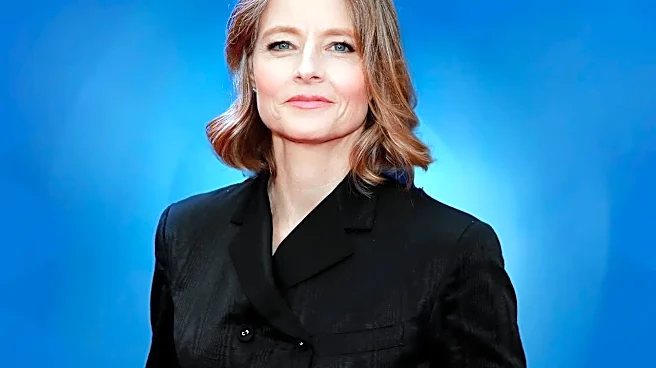
Jodie Foster's relationship with politically charged roles began at age 12. Her 1976 nomination for playing a child prostitute in Martin Scorsese’s Taxi Driver was a flashpoint. The role, which required her to undergo a psychiatric evaluation to be on set,
sparked a national debate about child actors and the depiction of exploitation. But for Foster, it was a formative artistic experience that set the template for her career: a willingness to inhabit complex, often uncomfortable characters that hold a mirror to society's anxieties. The controversy surrounding her casting and the film's violent climax created a protective, if notorious, aura around the young actress, establishing her as a serious talent unafraid of the third rail. This early brush with outrage, including the unwanted obsession from John Hinckley Jr. that led to his assassination attempt on President Reagan, solidified her intensely private, guarded public persona—a political act in itself in the world of celebrity.
The Accused: Demanding to Be Heard
Foster’s first Oscar win for Best Actress in 1988 for The Accused was a watershed moment. The film was one of the first mainstream Hollywood productions to graphically depict a gang rape and its aftermath. Loosely based on the real-life case of Cheryl Araujo, the movie tackled the then-prevalent and insidious practice of victim-blaming head-on. Foster played Sarah Tobias, a working-class woman who is put on trial as much as her attackers are. Test audiences initially reacted poorly, with many feeling her character "deserved" what happened, a sentiment that almost got the film shelved. However, its release forced a national conversation about consent, classism, and the culpability of bystanders. Winning the Oscar for this role wasn't just a recognition of a powerful performance; it was an industry acknowledgment of a film that gave a voice to victims and challenged the legal system’s inadequacies in handling sexual assault.
Clarice Starling: A New Kind of Feminist Hero
If The Accused was a direct political statement, Foster’s second Oscar for 1991's The Silence of the Lambs was a more nuanced cultural victory. Her portrayal of FBI trainee Clarice Starling offered a new model of a female hero. She wasn't a masculinized action star; she was competent, intelligent, brave, and defined by her professionalism in a world of menacing and condescending men. The film constantly emphasizes Clarice’s perspective, forcing the audience to experience the subtle and overt misogyny she endures. Her dynamic with Hannibal Lecter is a masterclass in psychological warfare, but it's her quiet determination and resilience that define her power. The film's massive success and clean sweep of the top Oscars validated a story where a woman saves another woman, not as a sidekick, but as the central, driving force of the narrative. While the film has faced later criticism regarding its portrayal of gender identity, Clarice remains a landmark feminist icon in cinema.
Privacy as a Political Stance
After securing two Oscars before the age of 30, Foster's career politics shifted from her choice of roles to the management of her own image. Her subsequent nomination for Nell continued her interest in outsider figures, but her most telling political moments came off-screen. She moved into directing and chose projects with overt political themes, like The Mauritanian. Her 2013 Cecil B. DeMille Award acceptance speech was a masterwork of personal politics. While many interpreted it as her public coming out, Foster later clarified that its true subject was a critique of the modern celebrity machine and a fierce defense of privacy. In an era of reality TV and relentless self-branding, her refusal to perform her private life for public consumption was a radical act. It was the ultimate assertion of control from an artist who spent a lifetime navigating the often-predatory demands of public life.