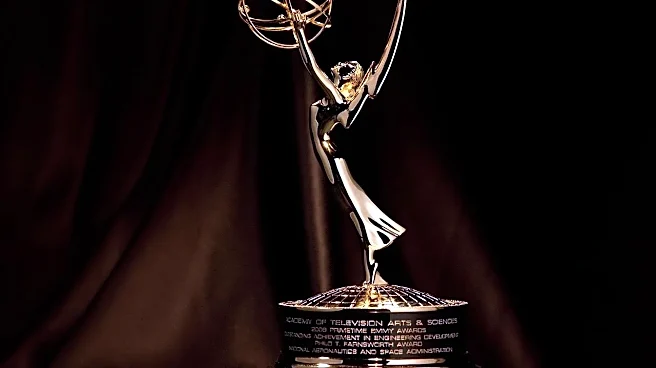








The Emmys' Ever-Shifting Landscape
Every year, the Television Academy honors the best in television, from the actors in front of the camera to the writers, directors, and craftspeople behind it. But the television industry is not a static entity. It morphs, expands, and reinvents itself.
To keep up, the Academy is constantly adjusting its categories. This can mean splitting categories, like when Outstanding Guest Performer was divided into separate actor and actress awards in 1989. It can also mean merging them, as seen in 2026 when the Outstanding Talk Series and Outstanding Scripted Variety Series categories were combined into a single Outstanding Variety Series award. These changes are a necessary reflection of an evolving medium, where the lines between genres blur and new formats, like short-form digital series, demand recognition. The goal is to ensure that Emmy-worthy work is rewarded, regardless of platform or format, but it leaves a messy historical ledger in its wake.
The Messy History of 'Guest' Appearances
Perhaps no area illustrates the confusion better than the Guest Actor and Actress categories. What defines a “guest” has been a moving target for decades. Initially, single-episode performers competed alongside series regulars in lead and supporting races. Then, dedicated guest categories were established, but the rules remained fluid. For a time, there was no limit on the number of episodes a "guest" could appear in, which led to actors like John Lithgow winning a guest Emmy for appearing in all 12 episodes of a season of "Dexter". In 2015, the Academy tried to bring clarity by instituting a rule: if a performer appears in 50% or more of a season's episodes, they must compete in the supporting categories. This change prevented actors with significant story arcs from dominating a category meant for shorter appearances. More recently, another rule prevents performers from being nominated as a guest for a role they were previously nominated for in a lead or supporting category, further tightening the definition. These tweaks make direct comparisons between a modern winner and one from the 90s nearly impossible.
Apples, Oranges, and Limited Series
The confusion extends far beyond guest stars. The distinction between a drama series, a comedy series, and a limited or anthology series is a battleground of eligibility. As production schedules have become more stretched out, some hit shows take long breaks between seasons, often missing Emmy eligibility windows entirely. This can lead to a slate of nominees dominated by new shows, making it difficult to establish the kind of long-running rivalries that once defined the awards. Furthermore, the Academy has recently moved several key awards for limited series—including supporting actor, supporting actress, directing, and writing—from the main primetime telecast to the Creative Arts ceremonies. While the Academy states this is to create a more engaging broadcast, it has been criticized for devaluing the contributions of artists in one of television's most prestigious formats. When the very prominence of an award changes, it adds another layer of complication to weighing its historical significance.
A Record with an Asterisk
So, what does this mean for the record books? It means every stat and superlative deserves a closer look. When we celebrate an actor for having the most nominations in a specific category, it’s worth asking how that category has changed over time. Did it exist 30 years ago? Was it easier or harder to get nominated in a previous era? The constant recalibration is a sign of a healthy, responsive awards body trying to keep pace with a dynamic industry. The Television Academy has to balance historical consistency with modern relevance, and more often than not, relevance wins. This has led to the introduction of juried awards, area awards where multiple winners are possible, and categories for emerging digital media. These innovations ensure fairness in the moment but make a unified, all-time leaderboard a statistical funhouse.