



From Four Buckets to a Spectrum
The original four-season model was revolutionary, giving people a framework to understand why certain colors made them glow while others looked draining. Springs were warm and bright, Summers cool and muted, Autumns warm and earthy, and Winters cool and high-contrast.
The problem was, these categories were wide. Two people could both be “Autumns” yet find that one thrives in mustard yellow while the other looks best in deep terracotta. The system needed more nuance, which led to its expansion.
The First Layer of Nuance: 12 Seasons
The first evolution created the 12-season system. It kept the four core seasons but added sub-seasons based on a person's most dominant color characteristic: hue (warm/cool), value (light/deep), or chroma (bright/muted). For example, an Autumn might be a Deep Autumn (value dominant), a Soft Autumn (chroma dominant), or a Warm Autumn (hue dominant). This gave a much more personalized palette but still left some people feeling like they didn't quite fit. What if your defining trait wasn't just being warm or soft, but being stuck perfectly in between two seasons?
The Hidden Detail: It's All About 'Flow'
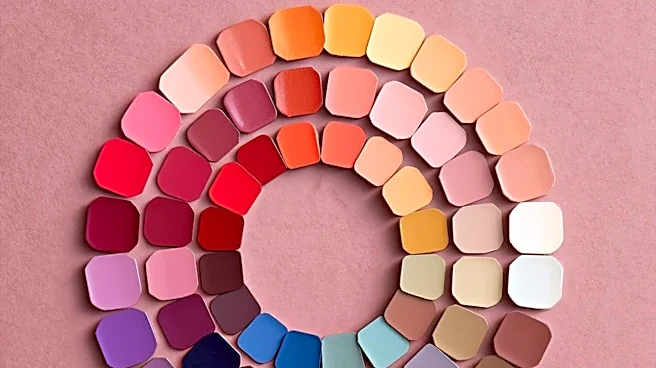
This brings us to the 16-season system and its 'hidden detail': the concept of flow seasons or neutral categories. This advanced model acknowledges that many people don't have a purely warm or cool undertone; they exist in the neutral space between the primary seasons. The 16-season analysis introduces palettes for people who 'flow' from one season into the next. For instance, a Soft Summer flows toward Autumn, and a Deep Autumn flows toward Winter. These in-between seasons are the key. They cater to the neutral-cool or neutral-warm individuals who were never perfectly served by the 12-season model. One popular 16-season system even adds four dedicated neutral seasons—like True Soft (between Autumn and Summer) or True Bright (between Spring and Winter)—to capture this perfectly.
Finding Your Place on the Spectrum
So, how do you know if you're a 'flow' season? It often comes down to feeling like no single season's palette is a perfect match. Do you find you can borrow colors from a neighboring season with ease? For example, if you're mostly an Autumn but find some of the deeper, cooler Winter colors also work, you might be a Deep Autumn flowing into Winter. This person has depth as their primary characteristic, with a neutral undertone that can handle colors from both the warm Autumn and cool Winter palettes, as long as they are deep and rich. Similarly, someone who feels caught between the soft, muted tones of Summer and Autumn might be a Soft season, whose primary trait is mutedness rather than temperature.
Putting the System to Work
Understanding your potential flow isn't just theory; it's a practical tool for building a more effective wardrobe. It frees you from the rigid rules of a single season and gives you permission to experiment with a wider, yet still curated, range of colors. Instead of trying to force yourself into a box that's slightly off, the 16-season system gives you a more precise 'home' on the color spectrum. This leads to smarter shopping, a more cohesive closet, and the confidence that comes from knowing you're wearing colors that truly harmonize with your natural coloring.