



The Blockbuster We've Been Expecting
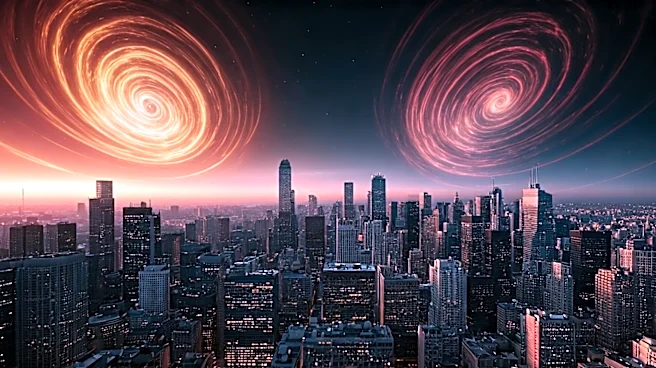
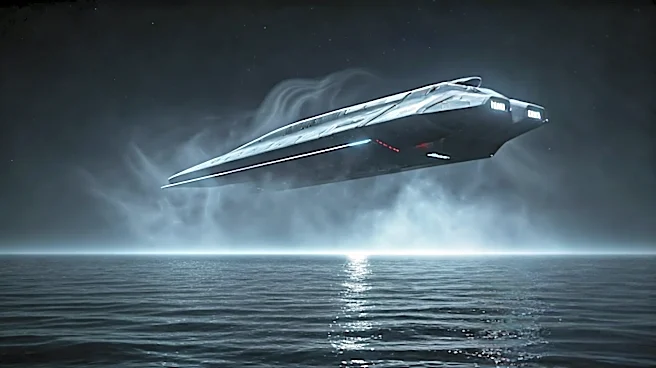
For over 70 years, pop culture has been our rehearsal for Disclosure. We’ve seen the script play out a thousand times: A somber president addresses the nation from the Oval Office. A silver craft hovers silently over a major city. Scientists stare at screens,
slack-jawed, as they receive an unmistakable signal from the stars. It’s an event we imagine as cinematic, world-stopping, and unambiguous—the final scene of a movie where humanity’s place in the cosmos is forever changed.
From *Close Encounters of the Third Kind* to *Arrival*, we’ve been conditioned to expect a singular, dramatic moment. The narrative is always grand, the implications societal. Will they be peaceful or hostile? What advanced technology will they share? These are the questions our fictional rehearsals have taught us to ask. The assumption is that Disclosure will be an external event—something that happens *to* us, delivered with the clarity of a Hollywood plot point. We are the audience, watching the biggest show in human history unfold on our screens.
The Reality Would Be… Paperwork
But the real event, should it ever come, would likely be far less cinematic. Forget the single, perfect speech. Think instead of a slow, confusing, and bureaucratic trickle of information. The most plausible version of Disclosure isn't a landing on the White House lawn; it's a press conference held by a mid-level Pentagon official from the All-domain Anomaly Resolution Office (AARO). It's a 300-page report filled with acronyms, redacted paragraphs, and inconclusive technical data released on a Friday afternoon.
There wouldn’t be a single moment, but a protracted season of debate. Scientists would argue over the integrity of the data. Pundits would spin it for political gain. Conspiracy theorists would claim the *real* truth was still being hidden. The confirmation wouldn’t feel like a stunning revelation but like assembling a complex piece of IKEA furniture with half the instructions missing. It would be messy, unsatisfying, and deeply human in its delivery. The initial public reaction would be less unified awe and more a collective, confused shrug as everyone tries to figure out what, exactly, was just confirmed.
The First Shockwave
Still, once the ambiguity settles and a new consensus solidifies—*it’s real*—the psychological impact would be immense. The first few hours and days would be defined by a sense of cosmic vertigo. Every religion, philosophy, and national identity is built on a foundation of human centrality. The confirmation of non-human intelligence doesn’t just add a new character to our story; it reveals we were never the main characters to begin with.
This is the moment the world shrinks. Our planetary dramas, our wars, our politics—all of it would suddenly seem provincial, like a squabble over a single grain of sand on an infinite beach. The awe would be real, but so would the terror. For many, it would trigger a profound existential crisis. The comforting ceiling of our reality would be shattered, revealing a vast, unknown, and unnervingly populated cosmos. The world before Disclosure and the world after would be two fundamentally different places.
The Question on the Drive Home
But as the global shockwave subsides and you’re driving home from work, the traffic and the setting sun feeling both ordinary and absurd, the biggest question won’t be about aliens. It won’t be 'What do they want?' or 'Where are they from?' The answer to 'Are we alone?' will have been delivered.
The question that will lodge itself in your mind, the one that will keep you up at night, is far more personal and destabilizing: 'If *that* was real this whole time… what else am I completely wrong about?'
This is the true paradigm shift. If the institutions you trusted—governments, science, media—either didn’t know or didn’t tell you about the most significant fact in human history, what does that say about everything else they report? If your own perception of reality was missing such a monumental piece, how can you trust your judgment on anything else? This question doesn't point outward to the stars; it points inward, directly at the foundations of your own beliefs, your worldview, and your sense of certainty.