


Greta Gerwig’s upcoming 'Narnia' adaptation is one of the most anticipated film projects in years. But her celebrated, high-energy style, particularly her use of music, might be the very thing that undermines the unique magic of C.S. Lewis’s world.
Gerwig's Musical Maximalism
From
the pop-fueled joy of 'Barbie' to the breathless, overlapping dialogue and score of 'Little Women', Greta Gerwig uses music as a primary engine. Her films are rhythmically alive; the score doesn't just support the action, it often drives it, telling you how to feel with an exhilarating lack of subtlety. In 'Barbie', the soundtrack was a star-studded event in itself, creating a world of pure, infectious pop. In 'Little Women', Alexandre Desplat's score acted like 'a ribbon that knits the storylines together', creating a sense of propulsive, emotional momentum. This approach has been wildly successful, defining her modern, vibrant authorial voice. But Narnia is not a story that benefits from constant propulsion. It is a world built on stillness, awe, and the jarring, often quiet, transition from our world to another.
The Quiet Wonder of Narnia
C.S. Lewis’s creation story for Narnia, found in 'The Magician’s Nephew' (the book Gerwig is adapting), is a moment of profound, musical genesis. Aslan sings the world into existence, a concept both grand and deeply personal. But much of the magic in the Narnia series comes from its contrast with silence. Think of the dead, cold quiet of the dying world of Charn, or the muffled soundscape of a world under the spell of an endless winter in 'The Lion, the Witch, and the Wardrobe'. The power of these moments lies in their atmosphere. Lewis was a scholar of medieval literature, fascinated by the concept of 'the music of the spheres'—a silent, cosmic harmony. To fill every one of these moments with a busy, emotionally directive score would be to rob them of their specific power. The wonder of stepping through a wardrobe into a snowy wood is the uncanny quiet, not a soaring orchestral cue.
The Modern Blockbuster's Crutch
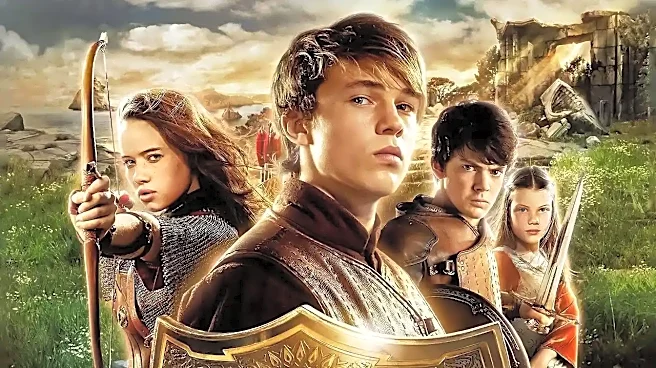
Modern blockbuster filmmaking is often guilty of musical hand-holding. Scores are frequently used as an emotional sledgehammer, swelling to signify importance, telegraphing every joke, and ensuring the audience never has to wonder what to feel. This trend can create a relentless, fatiguing viewing experience where the music dictates emotion rather than evoking it. While Gerwig’s use of music is more artful than most, a 'more is more' approach for Narnia would align with this unfortunate industry habit. The previous 'Narnia' film adaptations from Walden Media used Harry Gregson-Williams' scores to great effect, creating memorable themes but also knowing when to pull back and let a scene breathe. Gerwig's reported 'glam-rock' and 'rock 'n' roll' aesthetic for the film could be brilliant, but it needs to be applied with surgical precision, not as a blanket tone.
The Argument for Musical Restraint
The most powerful moments in fantasy cinema are often the quietest. Think of the Fellowship’s silent trek across the snowy peaks of Caradhras, or the awe-struck hush as the children first see a living, breathing dinosaur in 'Jurassic Park'. Music is powerful, but silence is, too. It creates tension, focuses the audience’s attention, and makes the eventual arrival of a musical theme that much more impactful. For Narnia, a story so deeply rooted in faith, wonder, and the clash between worlds, this dynamic is essential. The story’s magic is not just in what you see and hear, but in the feeling of otherness. A score that is ever-present risks making the magical feel mundane. By choosing her moments, Gerwig can ensure that when the music does swell—as Aslan sings his creation song, or when the children first glimpse Cair Paravel—it lands with the full weight of the divine and the spectacular.