






The Unprecedented Peak of 2005
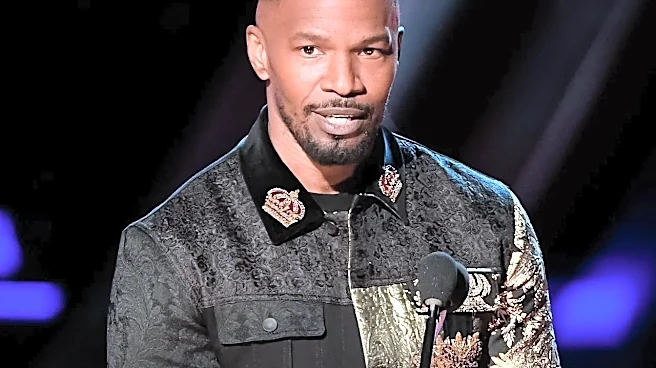
To understand the surprise, you first have to appreciate the peak. In 2005, Jamie Foxx achieved a feat managed by only a handful of actors in Oscar history. He received two nominations in the same year: Best Actor for his transformative portrayal of Ray
Charles in "Ray" and Best Supporting Actor for his role as a terrified taxi driver in "Collateral". He was the heavy favorite for his work in "Ray," having completely embodied the musician's mannerisms and spirit. He went on to win the Best Actor award, cementing his place in Hollywood's top tier. This double-nomination year wasn't just a win; it was a coronation, a sign that the Academy fully recognized his immense dramatic talent. It set the expectation that Foxx was not just a movie star, but a perennial awards contender.
The Django Disconnect
This is where the pattern begins to get strange. In 2012, Foxx took the lead in Quentin Tarantino's wildly successful "Django Unchained." He played the titular role, a slave-turned-bounty-hunter on a mission to save his wife. The film was a critical and commercial hit, earning five Oscar nominations, including Best Picture. His co-star, Christoph Waltz, won Best Supporting Actor for his role as Dr. King Schultz. Yet, Jamie Foxx, the film's lead and anchor, was nowhere to be found on the Best Actor list. Insiders and audiences alike were baffled. While some critics felt the performance was more stoic than emotionally expansive, his absence from the nominations was glaring, especially when the film and his co-star were so heavily decorated. How could the main character of a Best Picture nominee be overlooked?
The 'Just Mercy' Mystery
The feeling of déjà vu returned with 2019's "Just Mercy." In the film, Foxx gave a powerful, heart-wrenching performance as Walter McMillian, a man wrongfully convicted and sentenced to death row. It was precisely the kind of serious, socially relevant, and emotionally demanding role that the Academy often rewards. The film premiered to standing ovations, and there was significant Oscar buzz for Foxx's supporting performance. He even secured a nomination from the Screen Actors Guild (SAG), often a strong predictor of Oscar success. But when the Oscar nominations were announced, his name was again missing. The snub was seen by many as one of the most significant of the year, further cementing the confusing trend: the Academy loves Jamie Foxx, except when it inexplicably doesn't.
Decoding the Academy's Puzzle
So, what explains this hot-and-cold reception? There are a few working theories. One is that the Academy has a strong preference for Foxx in total transformation roles. His win for "Ray" involved him becoming a blind musical genius, a complete physical and vocal metamorphosis. His roles in "Django Unchained" and "Just Mercy," while powerful, were perhaps seen as less of an acting stretch and more as charismatic or stoic character work. Another theory revolves around category confusion and studio strategy. In "Collateral," he was arguably a co-lead, but was campaigned for and nominated in the supporting category, a common tactic to avoid vote-splitting. This might suggest that voters have a hard time placing his performances. Finally, there's the simple, unsatisfying reality of Oscar voting: with thousands of members, personal taste, internal politics, and the sheer volume of films in contention can lead to unpredictable outcomes that defy logical patterns. As Foxx himself has diplomatically noted, the work is for the art, not the awards, but the inconsistency remains a fascinating part of his legacy.