



The Original Fashion Disruptor
It all started with a wedding dress, a giant cake, and a wardrobe malfunction. When Madonna writhed across the stage at the very first VMAs in 1984, her lace corset, tulle skirt, and "Boy Toy" belt weren't just a costume for her "Like a Virgin" performance;
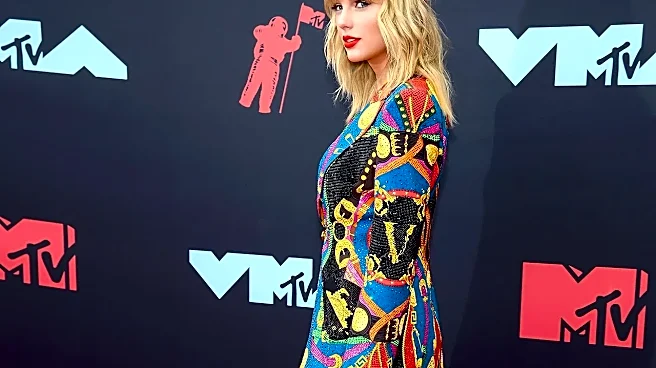
they were a cultural earthquake. At a time when awards shows were stuffy, formal affairs, her performance was a declaration that fashion could be part of the art—provocative, symbolic, and deeply personal. Her manager reportedly thought her career was over after an accidental flash of her backside during the performance. Instead, it did the opposite. That single moment helped establish the DNA of the VMAs as a space where fashion wasn't just worn, it was performed. It brought the stylized rebellion of music videos directly to a live audience, turning a look into a statement that would be copied by fans across the country.
The '90s: From Video Set to Red Carpet
Throughout the '90s, the line between music video persona and red carpet reality completely blurred. MTV was the ultimate style guide, and the VMAs were its high holiday. Hip-hop culture drove a new wave of street style into the mainstream, with artists like TLC, Tupac, and Snoop Dogg popularizing baggy jeans, workwear, and sports jerseys. Simultaneously, the grunge scene saw stars like Kurt Cobain and Courtney Love arrive in outfits that looked like they'd walked straight out of a Seattle thrift store, making anti-fashion a powerful statement in itself. The red carpet became a direct reflection of the decade's most powerful musical subcultures. It wasn't about wearing a designer gown; it was about embodying the attitude of your music. The looks were often DIY, accessible, and easily replicated, making the pipeline from VMA red carpet to suburban mall incredibly short.
Shock Value as Performance Art
By the late '90s and early 2000s, the VMA red carpet had evolved into a theater of shock and spectacle. The goal wasn't just to look good, but to be unforgettable. Rose McGowan’s 1998 beaded mesh “naked dress” was one of the most notorious looks of all time. While it caused a media frenzy, McGowan later revealed it was a deliberate political statement and her first public appearance after being sexually assaulted—an act of defiance. A year later, Lil' Kim took the idea of daring fashion to a new level with her iconic one-shouldered lavender jumpsuit, which left one breast exposed, covered only by a matching seashell pasty. The look, inspired by a joke from Missy Elliott, was crafted by stylist Misa Hylton and became one of the most talked-about ensembles in VMA history. These outfits weren't just clothing; they were headline-grabbing moments that cemented the VMAs as a place where fashion was fearless, confrontational, and guaranteed to be discussed the next day.
The Y2K Era and Beyond
The early 2000s saw the peak of pop's influence, and the VMAs were its epicenter. Britney Spears’ 2001 performance of "I'm a Slave 4 U" with a live python is remembered as much for the snake as it was for her green bikini top and jeweled hot pants—a perfect encapsulation of Y2K aesthetics. Jennifer Lopez’s all-white Sean Jean crop top and bandana look from 2000 became a quintessential “Jenny from the Block” moment, defining the high-low mix of street style and glamour. These looks were aspirational yet attainable, driven by the 24/7 exposure of music videos. From low-rise jeans to bedazzled accessories and velour tracksuits, the trends seen on the VMA stage and red carpet were quickly adopted by a generation of teens. The influence was so profound that today's artists, like Olivia Rodrigo and Lil Nas X, still pay homage to these vintage VMA looks on the red carpet, confirming their legendary status.