







The Unseen Architect of Immersion
Production design is one of cinema’s most crucial yet misunderstood arts. It’s the visual soul of a film, encompassing every set, location, and object that appears on screen. A great production designer, like Ruth De Jong, doesn't just decorate a scene;
she builds a tangible reality for both the actors and the audience. De Jong, who began her career under the mentorship of legendary production designer Jack Fisk on films like There Will Be Blood, has become one of the most sought-after names in Hollywood. Her work on projects ranging from Kenneth Lonergan's intimate drama Manchester by the Sea to Jordan Peele's horror epic Nope and Christopher Nolan's Oscar-winning Oppenheimer showcases a remarkable ability to craft environments that are as emotionally resonant as they are visually stunning.
A Master of Collaboration
A production designer’s vision is only as strong as their collaboration with the director. De Jong has forged powerful partnerships with some of today's most distinctive filmmakers. For Jordan Peele’s Nope, she helped craft the unsettling beauty of the American West, a landscape that became a character in itself. Her most recent and acclaimed collaboration was with Christopher Nolan on Oppenheimer. Nolan’s commitment to practical effects and in-camera realism meant De Jong was tasked with monumental feats, including building a 1940s-era Los Alamos from the ground up on a barren mesa in New Mexico. They spent weeks in intensive one-on-one meetings, poring over research to define the film's look. This close partnership ensured every visual choice served the film's first-person perspective, placing the audience directly inside the mind of J. Robert Oppenheimer.
Authenticity Over Accuracy
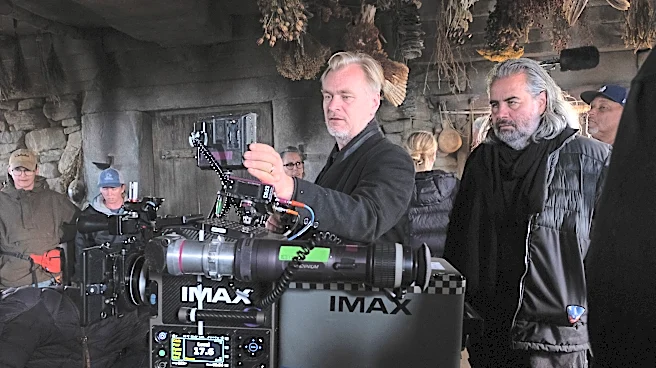
While historical projects demand immense research, De Jong and Nolan agreed that Oppenheimer should not feel like a museum piece or a documentary. Their goal was to create a sense of timelessness and avoid sets cluttered with period details that would scream, “It’s 1940!”. The focus was on emotional authenticity, not a slavish recreation of every historical photograph. De Jong’s team covered their production offices floor-to-ceiling with archival images, not to copy them, but to absorb the essence of the era. Nolan’s direction was clear: divorce from the research to create their version of the story. This philosophy extended to the smallest details. De Jong ensured that even the screws and nails were period-correct, not because the audience would notice every single one, but because this commitment to tangible reality creates a fully immersive world for the actors, which in turn translates to the screen. The use of IMAX cameras further amplified this, capturing the rich textures of the real wood, roofing, and materials she used.
Building Worlds From Scratch
The phrase “across continents” in the headline can be interpreted literally, but in the context of a film like Oppenheimer, it refers to creating distinct, self-contained worlds that span different locations, timelines, and psychological states. From the academic halls of Berkeley to the desolate Trinity test site, each environment needed its own identity while remaining part of a cohesive whole. For the cinematic Los Alamos, De Jong’s team had to carve a road to their chosen location before building anything. Nolan’s directive for zero CGI or set extensions meant that every building had to be constructed 360 degrees, allowing the camera to move freely and capture a complete, functional town. This approach grounds the story in a visceral reality. When the actors arrived on set, there were no modern cars or tents; they were dropped directly into the world of the Manhattan Project, allowing for a deeper level of performance and transportation for the audience.