



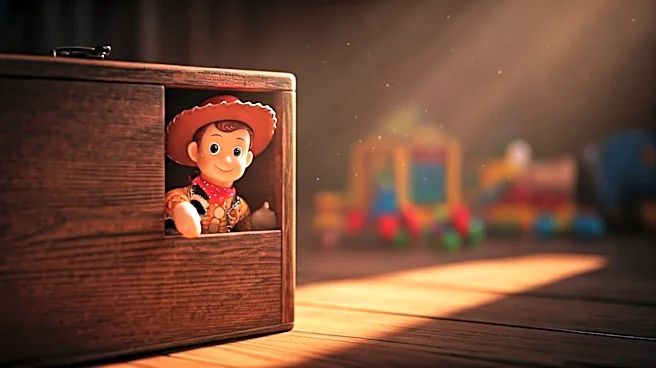


The Anatomy of a Pixar Antagonist
The Toy Story franchise doesn't do simple villains. Its antagonists aren't just evil; they're tragic figures born from the deepest anxieties of toy-dom. Sid in the original was the personification of a toy's worst nightmare: a destructive, god-like child.
Stinky Pete in *Toy Story 2* was the bitter, mint-in-box collector who believed toys were artifacts to be observed, not loved. Lotso Huggin' Bear in *Toy Story 3* was a plush tyrant twisted by the trauma of being replaced. And in *Toy Story 4*, Gabby Gabby was a sympathetic figure desperate for the validation of a child's affection, a goal that twisted her methods. The common thread is that each villain represents a corrupted or failed response to a toy’s primary purpose: to be played with. They are products of abandonment, neglect, or a fundamental misunderstanding of their role in a child's life. A truly great *Toy Story 5* villain can't just be a mean toy; it must embody a contemporary threat to the very idea of imaginative play.
The Ultimate Rival for Attention
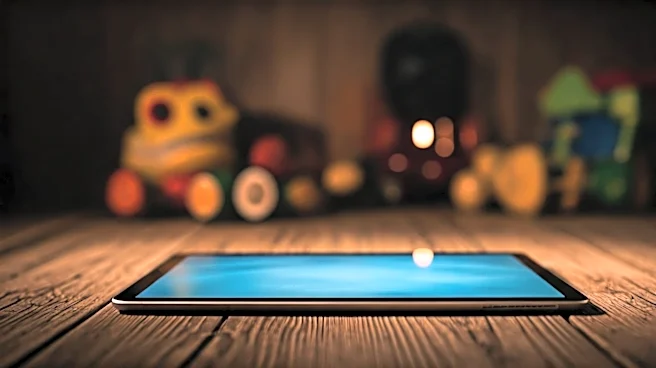
Enter the tablet. In the 21st-century playroom, the greatest threat to a traditional toy isn't a bully like Sid or a collector like Al. It’s the silent, glowing rectangle that commands a child's undivided attention for hours. A tablet isn't just another toy; it’s a portal to an infinite world of games, videos, and distractions that a simple action figure or pull-string doll can’t possibly compete with. It’s the ultimate replacement. Imagine our beloved cast of characters—Woody, Buzz, Jessie—sitting on the floor, motionless, as their new kid, mesmerized, just swipes and taps. The tablet isn't actively malicious in the way Lotso was. It doesn't need to be. Its very existence is an existential threat. It's a passive conqueror, winning the war for a child's heart without ever throwing a punch. This makes the potential for conflict so much richer and more terrifying. The enemy isn't just another toy fighting for shelf space; it’s a silent, seductive force that makes the old toys obsolete.
Sleek, Soulless, and Secretly Sympathetic?
From a character design perspective, a tablet is a goldmine. It could be personified as a sleek, minimalist figure—the anti-Woody. Where Woody is all stitched-together charm and folksy warmth, the tablet character could be cool, detached, and emotionally unreadable. Its voice could be a monotone, Siri-like algorithm, speaking in corporate-approved, user-friendly platitudes that mask a chilling indifference to the emotional world of other toys. This is where the “love to hate” element comes in. We would despise its smug efficiency and its power over the child. We'd hate how it effortlessly sidelines our heroes. But in true Pixar fashion, there would be a twist. What is a tablet’s tragic backstory? Perhaps it was designed solely to addict and pacify, never to be truly loved or seen as a friend. Maybe its internal world is a lonely prison of code, desperate for a genuine connection it's incapable of forming. A great villain makes you understand their perspective, even if you can’t forgive their actions. A tablet, programmed for utility but longing for affection, fits that mold perfectly.
A New Chapter for Playtime
By making a tablet the antagonist, *Toy Story 5* wouldn't just be re-treading old ground. It would be a powerful commentary on the state of modern childhood and the evolution of play itself. The first four films were largely nostalgic, celebrating a type of imaginative, physical play that is becoming less common. A film that grapples with screen time, digital distraction, and the place of traditional toys in a tech-saturated world would feel urgent and incredibly relevant to parents and kids today. The conflict would force Woody and Buzz to answer a new, difficult question: What is a toy’s purpose when the very nature of “play” has changed? It's a far more complex challenge than escaping a daycare or a collector's apartment. It’s about fighting for relevance in a world that seems to have moved on, and a tablet character is the perfect vessel to personify that struggle. It would be the most thematically ambitious and necessary villain the franchise has ever seen.