






The World’s Most Important Catwalk
To understand this shift, you first have to understand Pitti Uomo. On paper, it’s a trade show where brands and buyers connect. In reality, the cobblestone streets outside the Fortezza da Basso become the world's most influential, real-time runway. The
outfits worn by attendees—editors, buyers, designers, and influencers—are photographed relentlessly and beamed across the globe, setting the tone for how men will dress for seasons to come. It’s less about radical invention and more about subtle evolution. Trends here aren't dictated; they emerge. And for the last several years, a clear one has been the artful dressing-down of formal tailoring. The goal is no longer rigid perfection but relaxed confidence, a concept the Italians call *sprezzatura*, or studied nonchalance.
The Henley’s Rugged Pedigree
The Henley shirt is hardly a newcomer to the male wardrobe. Its origins trace back to the 19th-century English town of Henley-on-Thames, where it was the traditional uniform for rowers. Its defining feature—a placket of two or three buttons stopping mid-chest, with no collar—was purely functional, allowing for ventilation during strenuous activity. For decades, it remained an undergarment or a piece of rugged workwear, a symbol of unpretentious, blue-collar masculinity. It was the shirt of miners and lumberjacks, later adopted by on-screen rebels like Steve McQueen and Paul Newman, who cemented its status as a signifier of effortless, masculine cool. It was comfortable, durable, and decidedly casual—the absolute antithesis of a tailored suit jacket.
The Marriage of High and Low
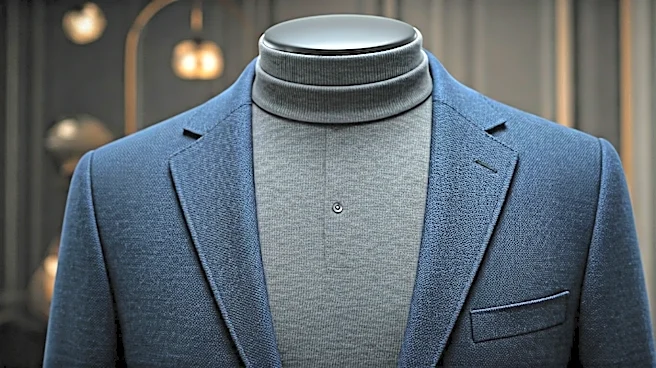
So, how did this working-class staple end up under a $3,000 sport coat in Florence? The magic is in the contrast. A crisp dress shirt and tie projects authority and formality. A crewneck T-shirt under a blazer can sometimes feel a bit too casual, a little like a tech CEO from 2012. The Henley occupies a perfect middle ground. Its button placket subtly echoes the structure of a collared shirt, framing the face in a similar way but without any of the stuffiness. Its typical fabrics, like waffle-knit or slub cotton, introduce a welcome dose of texture that a flat poplin shirt can’t. This textural play is crucial for adding visual depth and making an outfit feel considered, not just thrown together. By pairing the rugged Henley with the refined jacket, the Pitti Uomo regulars created a look that is both sophisticated and approachable, demonstrating a mastery of menswear’s unwritten rules by knowing exactly how to break them.
How to Get the Look Right
Pulling off this move requires a bit more finesse than simply swapping your dress shirt for the nearest Henley. First, quality is paramount. This isn’t the place for a thin, worn-out undershirt. Invest in a well-made Henley from a reputable brand, one with a substantial feel and good structure. Fit is the next key: it should be slim enough to layer cleanly without bunching, but not so tight that it looks like athletic compression wear. Color is your friend. While a white Henley can work, off-white, cream, heather gray, olive, and navy are often more sophisticated and forgiving, creating a softer contrast with your tailoring. Finally, consider the jacket. This look pairs best with less formal, softer-shouldered tailoring—think unlined Italian sport coats, tweed blazers, or even suede jackets. The goal is to lean into the relaxed aesthetic, not fight it with a rigid, corporate suit.