


The Public Stage for a Private War
To understand Taylor Swift’s masterclass at the American Music Awards, you have to go back to the summer of 2019. This was when the news broke that celebrity manager Scooter Braun had purchased Big Machine Label Group, the record label that owned the master recordings of Swift’s first six albums. For Swift, this was the ultimate nightmare scenario. She had been trying to buy back her work for years, and now it was in the hands of someone she publicly described as a bully. The battle wasn't just about money; it was about ownership, legacy, and artistic control. While the dispute played out in corporate backrooms and on social media, Swift needed a mainstream platform to make her case to the public. She found the perfect one at the 2019 AMAs,
where she was slated to receive the prestigious 'Artist of the Decade' award. The stage was literally being set for a confrontation.
The 'Artist of the Decade' Masterstroke
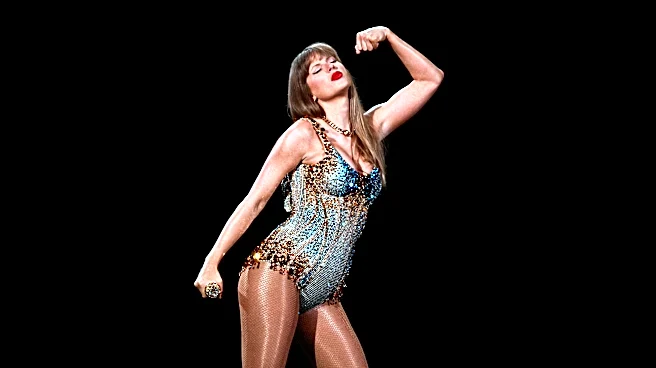
Days before the show, Swift posted a bombshell on social media, claiming Braun and Big Machine were blocking her from performing her old songs during her 'Artist of the Decade' medley. The statement was a stroke of strategic genius. It wasn't just a complaint; it was a public education campaign. Suddenly, millions of casual viewers were learning about the concept of 'master recordings' and 'performance rights.' After a public outcry, the performance went ahead, and it was anything but subtle. Swift opened her set wearing a white button-down shirt that looked like a prison uniform, stenciled with the names of her first six albums: 'Taylor Swift,' 'Fearless,' 'Speak Now,' 'Red,' '1989,' and 'Reputation.' The message was clear: her art was being held captive. She then shed the shirt to reveal a glittering gold outfit, launching into a medley that included 'The Man'—a song about female artists having to work harder than their male counterparts—before defiantly playing hits from her 'stolen' catalog. It wasn't just a performance; it was a live-action trailer for the entire re-recording project that would follow.
Weaponizing Fandom as a Business Tool
The 2019 AMA performance did more than just state Swift's case; it mobilized her army. By turning a complex legal issue into a simple, powerful visual narrative—the artist in chains fighting for her freedom—she gave her global fanbase a clear mission. The performance wasn't for the music executives in the room; it was for the millions of fans watching at home. She was training them to see the difference between the original versions (owned by others) and the future 'Taylor's Version' (owned by her). This emotional investment was critical. When she eventually released 'Fearless (Taylor's Version)' and 'Red (Taylor's Version),' the fanbase was already primed to stream, buy, and promote her new recordings while actively ignoring the old ones. The AMA performance was the pivotal moment that transformed passive listeners into active participants in her business strategy, ensuring the commercial success of her re-recordings before the first note was even released.
A Pattern of Narrative Control
While the 2019 AMAs was the most overt example, it fits a long-standing pattern of Swift using awards show stages to control her narrative. Think back to her 2016 Grammy acceptance speech, a thinly veiled response to Kanye West, where she advised young women to be wary of those who would 'try to undercut your success or take credit for your accomplishments or your fame.' These moments are never accidental. For Swift, a microphone and a national audience are tools for brand management and strategic communication. Her AMA appearances, in particular, became the perfect venue to connect her past legacy (the catalog) with her future independence. She wasn't just accepting an award for the decade; she was using the platform to secure her dominance for the *next* one, demonstrating that in the modern music industry, the most valuable asset isn't just a hit song, but the story you tell about it.