





Our Obsession with Spectacle
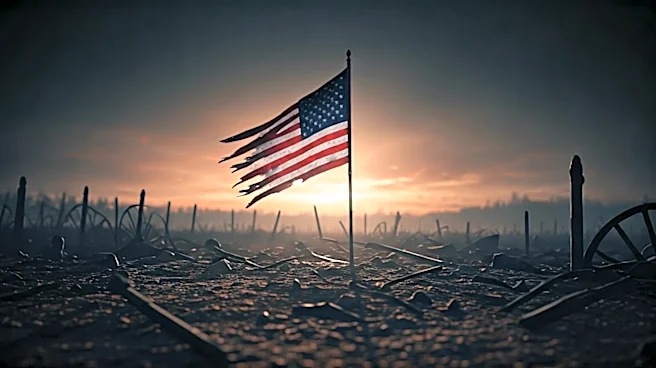
Let’s be honest: a massive, chaotic battle scene is an easy sell. It’s cinematic catnip. The clash of steel, the thunder of muskets, and the swelling orchestral score are designed to deliver a visceral thrill. In films about 1776, these sequences are meant
to represent the physical stakes of the war, the brutal cost of independence. They are loud, expensive, and visually arresting. For decades, the epic battle has been the default language for historical drama, a shorthand for stakes and conflict. It's what we've come to expect as the climax, the moment where history is visibly forged in fire and blood. But spectacle can also be a crutch. While it shows the 'what' of the conflict, it often struggles to convey the 'why' or, more importantly, what it truly felt like for the people living through it.
The Unseen Language of Sound
This is where sound design enters the picture, not as an accessory, but as a primary storyteller. Unlike a visual spectacle, sound operates on a psychological level. A filmmaker can use sound to build a world, create atmosphere, and generate suspense in ways visuals cannot. It's the difference between seeing a character is scared and feeling that fear yourself. Think of the subtle, ambient sounds that create a sense of place and time: the distant clang of a blacksmith's hammer, the murmur of voices in a tavern, or the oppressive buzzing of flies in a stuffy room during a heated debate. These auditory details transport an audience, making the 18th century feel less like a costume drama and more like a lived-in reality. Silence, too, is one of a sound designer's most powerful tools, capable of building immense tension before a critical moment.
From Cannon Fire to Whispers
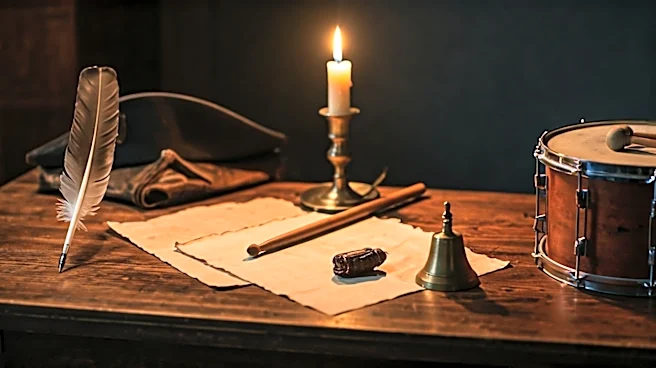
Compare a battle-focused film with a story that prioritizes psychological tension. HBO's celebrated miniseries John Adams is a masterclass in this approach. While it doesn't shy away from the realities of war, its most powerful moments are often quiet and intensely personal. The series won Emmy awards for both its sound mixing and sound editing, a testament to its craftsmanship. We feel the weight of history not in a sprawling battlefield, but in the sound of John Adams's boots on cold cobblestones, the frantic scratching of his quill as he drafts a letter, or the strained silence between him and Abigail. These sounds create intimacy and place us inside Adams's head. The sound of a distant, muffled battle can be far more terrifying than a full-blown action sequence because it forces our imagination to fill in the blanks, creating a personalized sense of dread.
Sound as a Time Machine
Ultimately, the goal of a historical story is to make the past feel present. While grand visuals can show us what the American Revolution looked like, sound design makes us feel what it was like. It provides the texture of daily life, the emotional undercurrent of a political argument, and the human scale of a world-changing event. It is the carefully crafted combination of dialogue, ambient noise, Foley effects (like footsteps and rustling cloth), and music that builds a believable world. It's what makes the characters feel like people rather than figures in a textbook. So the next time you watch a story set in 1776, pay attention to more than just the action. Listen for the sounds that are building the world, driving the emotion, and telling the story in a language that visuals alone can't speak. You might find that the quietest moments are the ones that roar the loudest.