



The Anatomy of a Curse
For decades, the words “penalty shootout” have sent a shudder down the spine of entire nations. England, a country that considers itself the home of football, developed a near-pathological fear of the format, having lost six of its first seven shootouts
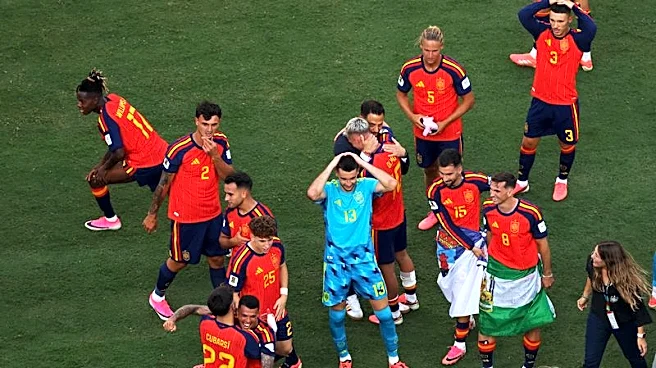
in major tournaments. The Netherlands, a nation famed for its revolutionary “Total Football,” has also been repeatedly undone by the spot kick, suffering multiple World Cup eliminations from 12 yards. More recently, Spain has earned the unfortunate distinction of the worst World Cup shootout record, with four losses and only one win. These aren't just statistical anomalies; they are cultural scars. Each loss adds another chapter to a national narrative of failure, creating a psychological weight that gets heavier with every passing tournament. It becomes a self-fulfilling prophecy, where players, fans, and the media begin to expect the worst, seemingly willing another dramatic failure into existence.
The Mind Game from Twelve Yards
The walk from the center circle to the penalty spot is often called the loneliest walk in sports. In those few seconds, a player is utterly alone with the weight of their country’s hopes on their shoulders. The science backs up the feeling of dread. Studies show that while a penalty taker succeeds about 85% of the time during the normal flow of a game, that number drops significantly in a shootout. The reason is pure psychological pressure. Researchers point to the concept of “loss aversion,” a theory that suggests the pain of losing is psychologically twice as powerful as the pleasure of winning. This is starkly reflected in penalty statistics: players who take a kick to win the match for their team score over 90% of the time. But when they must score to prevent their team from losing, the success rate plummets to below 60%. The goal shrinks, the keeper looks enormous, and the fear of becoming a national scapegoat overtakes technique.
The Pressure of Going Second
Even the coin toss before the shootout begins can tilt the odds. Teams that elect to shoot first win roughly 60% of the time. The reasoning is simple: the team kicking second is always playing catch-up. After the first team scores, the second team’s player steps up knowing a miss puts their side at an immediate disadvantage. That pressure compounds with every round. Each successful kick from the first team places more mental burden on the next player for the second team. It’s a relentless psychological squeeze. This is where the historical baggage becomes so heavy. A player from a nation with a history of shootout losses isn't just facing the goalkeeper; they’re facing the ghosts of every player who missed before them. It creates a collective anxiety that is hard to shake, a feeling that they are just the next actor in a tragedy everyone has seen before.
Trying to Break the Spell
So, are some nations doomed forever? Not necessarily. Teams are increasingly turning to sports science and psychology to exorcise their demons. England provides a compelling case study. Under manager Gareth Southgate—who himself famously missed a crucial penalty at Euro '96—the team began to change its approach. They started practicing penalties systematically, not just as an afterthought. This includes replicating the walk from the halfway line to simulate the pressure and using sports psychologists to equip players with mental tools like breathing exercises and visualization. Players are encouraged to develop a specific, repeatable routine and stick to it, blocking out the noise. They study goalkeepers’ tendencies and, crucially, work to reframe the shootout not as a potential failure but as an opportunity to be a hero. While they still lost the Euro 2020 final on penalties, England has won three of its last four shootouts, a sign that confronting the curse head-on can actually work.