





Homer’s Original Man of Deception
To understand a Nolan-esque Odyssey, you first have to appreciate that disguise is not just a plot device in the original epic; it is the story’s very soul. Odysseus is introduced from the first line as a “man of twists and turns.” His entire identity
is built on cunning, strategy, and deception. He lies to strangers as a form of protection and control. His most famous disguise—that of a lowly, decrepit beggar upon his return to Ithaca—is the ultimate expression of his character. It’s a tool that allows him to test the loyalty of his servants, the arrogance of his enemies, and the faithfulness of his own family. This isn’t just a mask; it’s a crucible. By becoming a nobody, Odysseus gets to see the unvarnished truth of the kingdom he left behind. The disguise is a weapon of intelligence before it becomes one of violence.
Nolan's Career-Long Identity Crisis
Now, consider Christopher Nolan’s filmography. If there is a single thematic thread running through his work, it is the fragile, constructed, and often deceptive nature of identity. From the self-deceiving protagonist of Memento to the rival magicians living a literal lie in The Prestige, Nolan’s characters are constantly wrestling with who they are versus who they pretend to be. Inception builds entire worlds out of shared illusion, while the Dark Knight trilogy is fundamentally about a billionaire who dons a mask to become a symbol. For Nolan, reality is subjective and identity is a performance. His films are narrative mazes that repeatedly ask one question: How can you be sure of who you are when memory, perception, and even time can be bent and broken?
Beyond the Beggar’s Rags
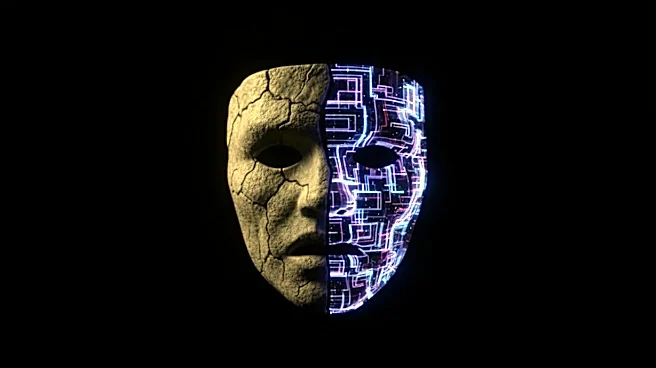
Marrying these two sensibilities would create something far more complex than a simple hero in disguise. A Nolan adaptation would obsess over the psychology of the mask. What does it do to Odysseus’s mind to feign weakness while possessing immense strength? Nolan wouldn’t just show us the disguise; he’d trap us inside it. Using his signature non-linear structures, he could place the audience within Odysseus’s fractured sense of self, cutting between the conquering hero at Troy, the weathered survivor lost at sea, and the anonymous old man shuffling through his own palace. The disguise would become a metaphysical state, a way to explore memory, trauma, and the terror of returning home only to find you no longer recognize yourself, or your world. It becomes an internal journey as much as an external one.
The Unmasking as a Nolan Twist
The climax of The Odyssey is one of the most brutal and cathartic in all of literature: Odysseus, still in his beggar’s rags, effortlessly strings his great bow and begins the systematic slaughter of his enemies. In Nolan’s hands, this reveal would be more than just an action sequence; it would be a reality-shattering twist on par with his greatest cinematic moments. The unmasking wouldn't just be about pulling off a hood. It would be a conceptual detonation, the moment where the subjective reality of the suitors—a world where they are in charge and the king is dead—collides violently with objective truth. The reveal of Odysseus’s identity would function like the final turn of a magic trick, forcing every character to re-evaluate everything they thought they knew, just moments before their world is brought to a bloody end.