


The Cult of Midnight Movies
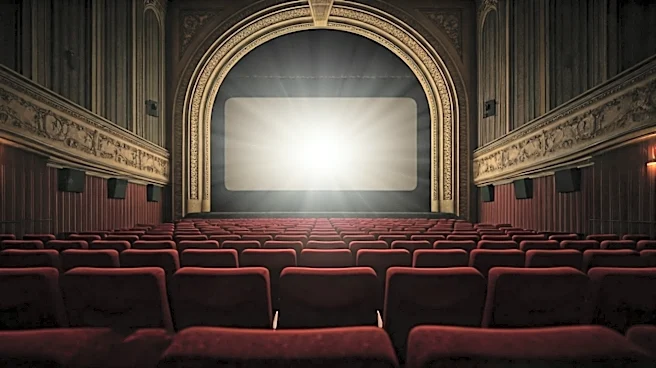
For decades, “midnight movie” has been synonymous with the strange, the shocking, and the subversive. These are not your typical four-quadrant blockbusters. They are films designed to provoke a reaction, to be talked about long after the credits roll.
At film festivals like Sundance, SXSW, and Tribeca, the Midnight section is a curated haven for this kind of filmmaking. It’s where you find the next great horror-comedy, a mind-bending sci-fi thriller, or a genre-defying experiment that’s too bold for the mainstream—at least, at first. Tribeca’s 2024 lineup was no exception, featuring titles like *The Damned*, a supernatural horror set in a 19th-century convent, and *#AMFAD: All My Friends Are Dead*, a gory slasher with a dark, comedic twist. These films aren't made by committee; they’re driven by a singular, often audacious, vision.
The Real Lesson: Hunger for Originality
So, what’s the lesson for the big studios? It’s simple: Audiences are starving for original ideas. In an era dominated by sequels, prequels, remakes, and cinematic universes, a truly fresh concept feels like a breath of fresh air. The films that populate Tribeca’s Midnight program—like *The A-Frame*, a sci-fi body horror about a machine that reverses aging at a terrible cost—are built on high-concept hooks that are instantly intriguing. They offer something you haven't seen a dozen times before. While a major studio might see risk in a film that doesn't come with built-in brand recognition, these smaller, concept-driven films tap into a powerful market force: genuine curiosity. The buzz they generate isn't bought with a nine-figure marketing budget; it's earned through word-of-mouth from audiences thrilled to have discovered something new.
The Indie Horror Blueprint for Success
If this sounds like wishful thinking, the box office numbers of the last few years prove it’s a viable strategy. The most profitable and talked-about films have often been original, mid-budget genre movies that follow the Midnight ethos. Think of *Barbarian* (2022), a film that started with a simple, terrifying premise and spiraled into unpredictable chaos. Or *Talk to Me* (2023), an Australian horror film born from a viral concept that became A24’s highest-grossing horror release. Even *M3GAN* (2023), a studio production, succeeded because its bonkers, self-aware concept felt fresh and exciting in a sea of sameness. These films weren’t based on billion-dollar IP. They were based on a killer idea, executed with style, and marketed to an audience desperate for a unique theatrical experience. They are, in spirit, Midnight movies that broke into the mainstream.
Why Hollywood Is Still Missing the Point
Despite this clear evidence, the major studios remain addicted to the blockbuster model. They pour hundreds of millions into films based on established properties, hoping to mitigate risk. But as recent stumbles have shown, that model is faltering. Audiences are no longer a captive market; they have endless streaming options at home. To get them into a theater, you need to offer an event. And increasingly, that “event” isn't just about scale, but about originality. A film that everyone is talking about because of its shocking twist or wild concept is a more powerful draw than another CGI-heavy spectacle that feels like a content obligation. The financial risk of a dozen mid-budget genre films is a fraction of the cost of one failed blockbuster, and the potential for a breakout hit like *Smile* or *Get Out* offers an astronomical return on investment.