




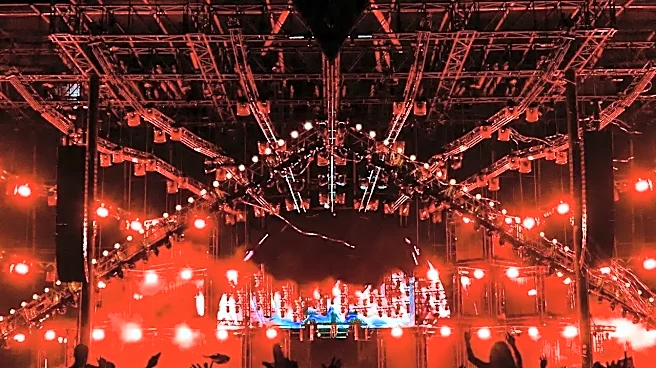
The Arena: A World of Control
An arena tour is a sound engineer’s paradise of predictability. Inside a venue like the Moody Center, the environment is a known quantity. The walls, ceiling, and seats create a contained acoustical space. While every room has its quirks—pesky reflections
or standing waves—they can be measured, modeled on a computer, and tamed. The engineer on a dedicated tour often works with the same artist and crew every night, using a custom audio setup that travels with them. They have the luxury of a full soundcheck, sometimes lasting hours, to meticulously tune the system to the room and dial in the mix. The goal is consistency and perfection: to replicate the artist's sonic vision as faithfully as possible, night after night. It’s about building a perfect, repeatable audio experience from the ground up.
The Festival: Embracing the Chaos
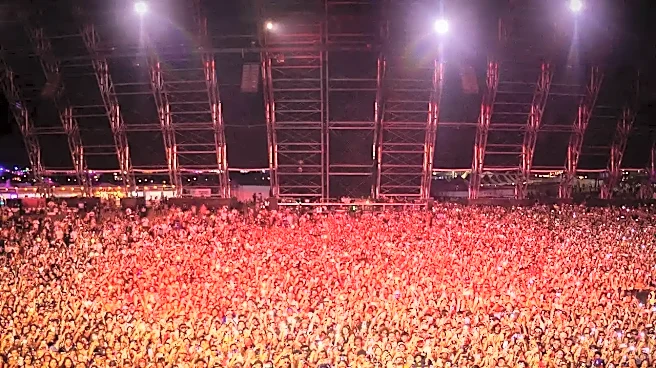
Enter the sprawling fields of Zilker Park for Austin City Limits. Here, control is an illusion. An outdoor festival is an exercise in adaptation. There are no walls, so sound disperses freely, but it’s also at the mercy of the elements. Wind can shear off high frequencies, and changes in temperature and humidity can alter how sound travels through the air, forcing engineers to make adjustments on the fly. At a multi-stage festival, sound bleed from an adjacent performance is a constant battle, requiring careful speaker placement and system design to create isolated sound zones. The goal isn't just to sound good, but to be heard clearly without disturbing the stage 500 feet away.
The Time Crunch: 'Throw and Go'
Perhaps the biggest difference is time. On an arena tour, the day starts early, with crews rigging gear for hours to perfect the setup. At a festival, an engineer for a non-headlining act is lucky to get a 15 or 30-minute changeover. Forget a detailed soundcheck; most get a quick "line check" to confirm that every microphone and instrument is working. Often, the first song of the set becomes the real soundcheck, with the engineer furiously making adjustments as the band plays. Experienced festival engineers prepare a template or "show file" beforehand, but they must be ready to adapt to the festival's house PA system instantly. It’s a high-pressure scenario known in the industry as "throw and go."
One Artist vs. The Entire Lineup
A touring engineer focuses on a single artist's sound, refining it over dozens of shows. A festival engineer, especially one working for the audio provider like LD Systems at ACL, has a different mission. Their job is to provide a versatile, high-quality system that can satisfy the technical demands of every artist on the bill, from a folk singer to an EDM DJ to a rock band. The equipment must be universally accepted by touring professionals. This requires a different mindset. Instead of dialing in one perfect mix, the festival's lead engineers are managing a complex infrastructure, coordinating wireless frequencies across multiple stages, and ensuring each visiting engineer can plug in and get a great sound quickly and reliably.
A Different Definition of Success
In an arena, success is sonic flawlessness—a mix that sounds pristine and consistent from the front row to the back. Every nuance is sculpted. At a festival, success is defined by impact and intelligibility under challenging conditions. The engineer has to deliver a powerful, engaging mix for a massive, transient audience while fighting the environment and the clock. There's less room for delicate reverb tails that would get lost in the open air and more focus on a punchy, clear, and robust sound that can cut through the noise and energize a crowd. It's less about painting a detailed masterpiece and more about creating a bold, beautiful mural that can be appreciated from a distance.