









A World of Rationing and Restraint
To understand the bombshell that was the New Look, you first have to picture the world it was born into. In February 1947, Europe and the United States were still clawing their way out of the shadow of World War II. Austerity was not just a policy; it was a way of life.
Fabric was rationed, clothing was utilitarian, and the popular silhouette was boxy and practical, with sharp, masculine shoulders—a style born of necessity. In Great Britain, the government's Utility Clothing Scheme enforced simplicity, and dressing frugally was seen as a patriotic duty. This was a world of "make-do-and-mend," where women painted seams on their legs to simulate stockings and fashion had effectively been put on hold. The prevailing aesthetic was one of somber practicality, designed for a society that had endured immense sacrifice.
Dior's Extravagant Revolution
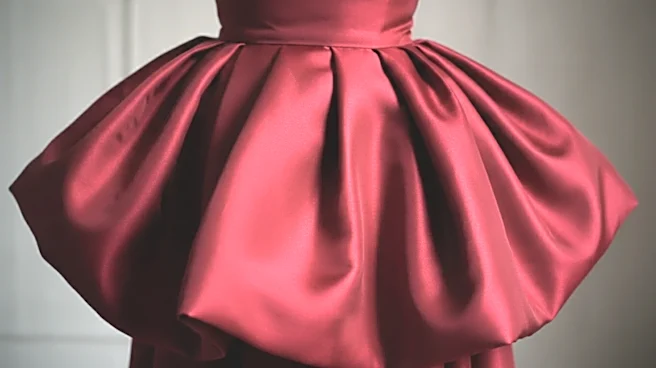
On February 12, 1947, Christian Dior unveiled his debut collection, which he called "Corolle" (like the petals of a flower). It was anything but practical. He sent models down the runway in jackets with soft, sloping shoulders, tiny cinched waists, and enormous, mid-calf skirts that used scandalous amounts of fabric—some up to 20 yards for a single dress. It was a complete rejection of the wartime look. The editor-in-chief of Harper's Bazaar, Carmel Snow, was so struck by the revolutionary silhouette that she famously declared, "It's quite a revolution, my dear Christian. Your dresses have such a new look!" The name stuck, and an icon was born. Dior later said he had designed "flower-like women," aiming to bring back a sense of beauty and prosperity after years of hardship.
The Alternative: A Push for Practicality
Dior's vision was not universally celebrated; in fact, it was met with immediate and fierce opposition. This is where fashion almost went down a different path. The alternative wasn't another single designer, but a powerful movement for continued austerity. Governments, still managing crippled economies, were horrified. The president of the British Board of Trade publicly condemned the designs as wasteful. In the streets of Paris, models wearing the New Look were physically attacked by market women incensed by the extravagance. In the U.S., protest groups like the "Little Below the Knee Club" formed, with members carrying signs like, "Mr. Dior, we abhor dresses to the floor." Many women saw the corsets and long skirts as impractical and regressive, a step back from the freedom they had gained during the war. The alternative vision was a continuation of the American Look—comfortable, versatile sportswear that had flourished during the war, championed by designers like Bonnie Cashin and Claire McCardell.
The Battle of Ideas
The clash was ideological. On one side was the practical, modern, and independent femininity represented by American sportswear and the enduring wartime spirit. On the other was Dior's fantasy of opulent, traditional femininity. Fellow Parisian designer Coco Chanel was one of Dior's most scathing critics, even though her own major comeback wouldn't happen until 1954. She famously quipped, "Dior doesn't dress women. He upholsters them." She saw his restrictive designs as created by a man who didn't understand the modern woman's life. Had this practical mindset won, 1950s fashion might have been an evolution of the 1940s—more streamlined, functional, and less theatrical, pre-dating the minimalist movements of later decades. Instead of a dramatic hourglass, the ideal might have remained a more natural, athletic silhouette.
Why Fantasy Ultimately Won
Despite the outrage, the New Look triumphed. Why? Because after years of deprivation, many people were desperate for fantasy, beauty, and a definitive end to the wartime era. Dior's collection wasn't just clothing; it was a symbol of hope and a return to glamour and prosperity. While some found it restrictive, many others embraced the hyper-feminine silhouette as a welcome antidote to drab, uniform-like clothing. As rationing eased and economies recovered, the initial shock wore off, and the style that once seemed offensively wasteful became aspirational. It spread rapidly, with other fashion houses quickly imitating the silhouette. The New Look so perfectly captured the collective yearning for a more beautiful future that it not only defined a decade but also cemented Christian Dior's place in fashion history.