
The Unseen Art of Movie Sound
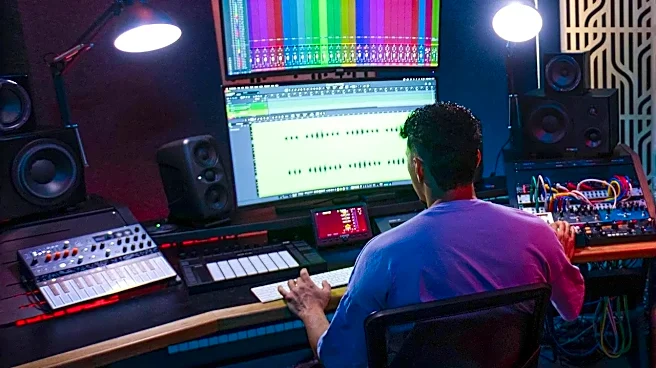
First, a quick primer. Most of the sounds you hear in a film—from a jacket rustling to a teacup clinking—aren't captured during filming. On-set microphones are focused on one thing: dialogue. Everything
else is added later in post-production. This is the world of Foley, an art form named after its pioneer, Jack Foley. Foley artists watch the film and perform sounds in sync with the action, using a wild assortment of props to create a believable audio world. Footsteps are considered one of the most fundamental and challenging parts of their job. An artist has to match the character’s weight, their mood, their pace, and the surface they’re walking on, all while making it sound completely natural.
The Trick Isn't Louder, It's Clearer
Here’s where the horror trick comes in. In a normal scene, footsteps are part of a larger soundscape. They blend in. In horror, the goal is the opposite. The footstep needs to feel unnatural, isolated, and hyper-detailed. Foley artists achieve this by subverting expectations. For a creepy creak on a wood floor, an artist might perform the sound wearing only socks to eliminate the shoe's impact, ensuring all you hear is the pure, unsettling strain of the wood. The technique is about isolation and texture. The sound is often recorded “dry” with very little natural room echo and then placed into a scene that has been intentionally stripped of other ambient noise. This unnatural clarity is what makes the sound pop, grabbing your attention and signaling that something is wrong.
Weaponizing Silence and Your Brain
The footstep itself is only half the equation. The other half is the silence surrounding it. Our brains are pattern-recognition machines, hardwired for survival. A constant, low hum of ambient noise is normal. Complete silence is not. When a filmmaker creates an unnaturally quiet moment, your brain goes on high alert, anticipating a disruption. That's when the Foley artist strikes. A single, clear footstep pierces the quiet, triggering your brain’s threat-detection center, the amygdala, before you even have time to process it consciously. It mimics the sound of a predator or an intruder—a solitary presence that does not belong. This combination of engineered silence followed by an isolated, distinct sound is a powerful psychological tool for building suspense and delivering scares.
Hearing It in Action
Once you know the trick, you hear it everywhere. Think of the slow, deliberate steps of the unseen entity in the Conjuring films, where Foley artist Stefan Fraticelli mastered the art of the terrifying creak. Or consider A Quiet Place, a film where the very concept hinges on the horror of isolated sounds. Every footfall on sand or snap of a twig is given monstrous weight because it’s surrounded by near-total silence. In older slashers like Friday the 13th, the sound of heavy boots on wet leaves signals impending doom long before you see the killer. The artists creating these sounds aren't just making noise; they are performing dread, using specific shoes, surfaces like gravel pits or custom floorboards, and precise microphone placement to make each step a miniature horror story.