



The Grandmother and the Teddy Bear
The single most important influence on Jean Paul Gaultier wasn't a fellow designer or a glamorous film star, but his maternal grandmother, Marie. Raised in a Parisian suburb, a young Gaultier was fascinated by her world. He has spoken of watching her give
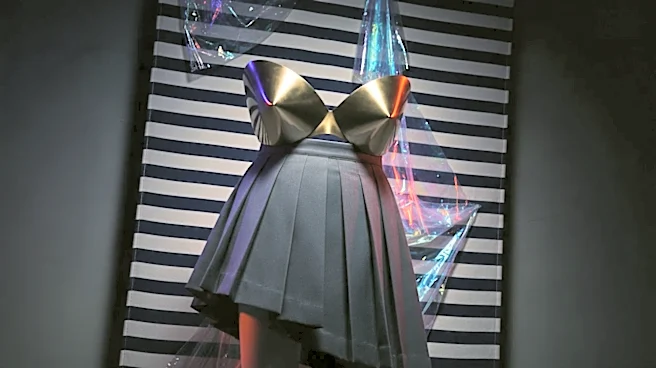
clients makeovers and being enthralled by her closet, which contained the very corsets that would become his signature. This early exposure to the architecture of undergarments wasn't about restriction; it was about the mystery and power of femininity. The first-ever Gaultier cone bra wasn't for a supermodel, but for his childhood teddy bear, Nana. This playful act of a creative child, crafting a pointed bra for a stuffed animal, contained the DNA of his entire career: a desire to look at objects, expectations, and gender with fresh, irreverent eyes.
From the Sidewalk to the Catwalk
While his grandmother’s closet provided the initial spark, the streets of London in the 1970s provided the explosion. Gaultier was captivated by the city's punk movement. The DIY aesthetic, the gender fluidity, and the raw, anti-establishment energy were a world away from the polished halls of Parisian haute couture. He saw beauty in what others deemed strange or unrefined. This became a core tenet of his brand. Gaultier was one of the first designers to champion street casting, placing “atypical” models with unique faces, ages, and body types on his runway long before it was an industry trend. He wasn't just designing clothes; he was creating a tribe that reflected the diverse, eclectic world he saw and admired, mixing high fashion with low-brow culture in a way no one else had.
The Cone Bra, Weaponized
That teddy bear experiment eventually grew up. After first appearing in his collections in the mid-1980s, the cone bra was catapulted into the global stratosphere when he collaborated with Madonna for her 1990 Blond Ambition tour. When Madonna ripped off a pinstripe suit to reveal the pink satin cone-bra corset, it was a defining moment in pop culture. For Gaultier, this wasn't about simply recreating a 1950s bullet bra; it was about transforming it. Underwear became outerwear, a symbol of female restriction was re-imagined as armor, and feminine sexuality was presented as a source of undeniable power, fully controlled by the woman wearing it. Madonna, who appreciated his blending of masculine and feminine, knew exactly what she was doing. The collaboration cemented Gaultier’s status as fashion's beloved “enfant terrible” (terrible child).
Liberating the Man-Skirt
Gaultier’s mission to subvert norms wasn't limited to womenswear. In 1985, he famously introduced skirts for men. This wasn't merely for shock value. Gaultier argued that masculinity wasn't defined by clothing, and that historically, garments like kilts and robes were symbols of virility and power. By putting men in skirts, sarongs, and kilts on the runway, he was questioning modern Western conventions about what it means to be a man. He was applying the same logic he used for the corset: take a loaded garment, strip it of its conventional meaning, and represent it as a tool of freedom and self-expression. It was a radical statement on the fluidity of gender that was years ahead of its time, further proving that his work was always about more than just clothes—it was a commentary on society itself.