



The Old Guard: Cable's Enduring Simplicity
Let's be honest: the glory days of cable TV are a memory. By 2026, fewer than a quarter of American households use cable as their main source of TV. Yet, for the specific problem of finding 'something good on now,' cable retains a stubborn, almost elegant
advantage. It's the power of the pre-made decision. You press the 'Guide' button, and there it is: a curated grid of programming, already in progress. There's a comfort in this passive discovery—stumbling upon a classic movie on TNT, catching the last half of a basketball game, or zoning out to a home renovation show. This experience requires zero mental energy. You are not a content manager, you are a viewer. For those exhausted by the paradox of choice, cable's biggest weakness—its lack of control—becomes its defining strength.
Streaming's Counter-Attack: The Rise of 'FAST' TV
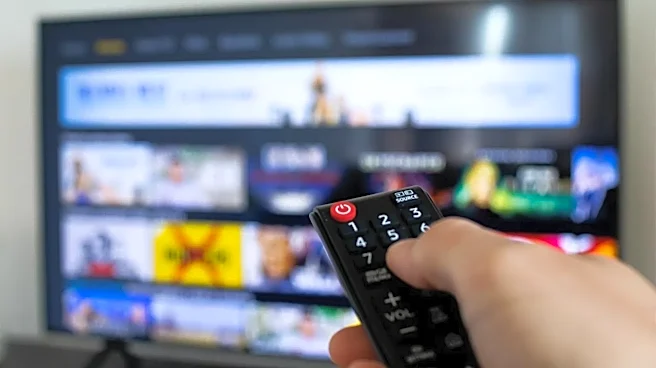
Streaming services, which now capture the largest share of TV viewing time, spent years training us to be active users: search, click, binge. But they saw the appeal of cable's simplicity and have fought back with a powerful weapon: Free Ad-Supported Streaming TV, or FAST. Platforms like Pluto TV, Tubi, and The Roku Channel have exploded in popularity by mimicking the classic cable guide. They offer hundreds of linear, scheduled channels dedicated to everything from '80s sitcoms to true crime documentaries. These services are streaming’s admission that sometimes, we don't want to choose. We just want to surf. This hybrid approach gives you the 'always on' feel of cable, but inside the streaming ecosystem you already inhabit.
The 'Now' Factor: Immediacy and Decision Fatigue
So, which is truly faster when you just want to start watching? For pure, zero-thought immediacy, traditional cable still has a slight edge. You turn on the box, and a channel is already there. No apps to launch, no profiles to select. It is the path of least resistance. However, streaming has narrowed the gap. Smart TVs now have FAST services like Samsung TV Plus integrated directly, launching you into a channel guide instantly. The real difference is psychological. With cable, you’re choosing from a finite list of what's on right now. With streaming, even on a FAST channel, the temptation to exit the linear guide and browse an infinite on-demand library is always there, threatening to pull you back into the scroll.
The Cost of Convenience in 2026
A decade ago, the cost argument was simple: streaming was the cheap upstart. In 2026, that's no longer the case. The average cable bill can be high, but a household subscribing to a handful of the top ad-free streaming services can easily spend a comparable amount. This is where FAST channels have a massive advantage: they are free. The trade-off, of course, is ads and often a library of older content. But for the 'something on now' viewer, this is a powerful value proposition. The most expensive option is often a full live-TV streaming bundle like YouTube TV, which essentially recreates the cable package at a similar price, just delivered over the internet.
The Verdict: Know Your TV Personality
In the end, the 'better' option depends entirely on what kind of viewer you are. If you are a creature of habit who values absolute simplicity and wants a reliable, curated stream of live news, major sports, and network shows without thinking about it—and are willing to pay for that simplicity—the streamlined experience of a cable package still delivers. It’s a complete, if expensive, solution to the 'what's on?' problem. For everyone else, the answer is streaming, but specifically, the free, ad-supported kind. For the viewer who just wants background noise, to stumble upon a movie from 1998, or watch a 24/7 channel of a single reality show, FAST platforms are the undisputed champion. They provide the channel-surfing joy of old-school TV without the high cost and rigid contracts. They are the 2026 answer to wanting something good on, right now.