






The Anatomy of a Curse
For soccer fans, the phrase “penalty curse” immediately brings one team to mind: England. From the 1990 World Cup semifinal against West Germany to the Euro 2020 final against Italy, the English national team has a long and painful history of being eliminated
from major tournaments on penalty kicks. This string of high-profile failures, often featuring iconic and heartbreaking misses, has created a narrative of dread. Over decades, these individual losses have compounded into a collective national trauma. The fear is not just about losing another game; it's the gut-wrenching feeling that history is doomed to repeat itself. Spain has a similarly ugly record in World Cups, holding the unfortunate title for the most shootout losses. This history becomes a story the nation tells itself, a story where the final chapter always seems to end in the same agonizing way.
The Psychological Burden on Players
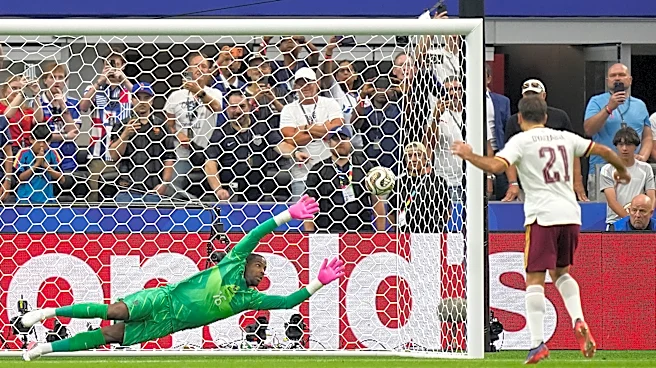
This national anxiety doesn't just stay in the stands or living rooms; it spills onto the field. Research shows the immense pressure significantly impacts performance. While a penalty taken during normal gameplay is converted about 85% of the time, that rate drops to 76% in a high-stakes shootout. Psychologists point to the concept of “loss aversion,” where the fear of losing feels more powerful than the joy of winning. This is proven in the statistics: players score on 92% of penalties that could win a match, but that number plummets to below 60% for a kick that must be scored to avoid elimination. The weight of past failures adds an immense cognitive load. Players aren't just trying to score a goal; they're fighting the ghosts of tournaments past and the expectations of a nation holding its breath. Every step to the penalty spot is a walk through history, and that burden can be crushing.
The Fan and Media Feedback Loop
The fear is amplified by a powerful feedback loop involving fans and the media. Ahead of any knockout game, the national conversation inevitably turns to the dreaded possibility of penalties. Media outlets produce endless montages of past misses, interview retired players about their infamous shots, and analyze the team’s dismal record. This constant reinforcement of failure creates an atmosphere of fatalism. It's no longer just a sporting event; it becomes a national psychodrama. This external pressure can be internalized by the players, creating a self-fulfilling prophecy. When a nation expects to lose, it makes it that much harder for the players to believe they can win. The fear becomes contagious, a shared cultural experience that binds the team and its supporters in a cycle of anxiety and anticipated grief.
Is It Possible to Break a Curse?
A history of failure is not a permanent sentence. Some nations have managed to rewrite their narratives. Italy, for example, lost its first four major tournament shootouts, including the 1994 World Cup final. Yet, they later won the 2006 World Cup and Euro 2020 finals on penalties, demonstrating a complete reversal of fortune. Argentina has become a master of the format, winning a record six of their seven World Cup shootouts, including two on their way to victory in 2022. Even England has shown signs of a turnaround, winning three of four shootouts under manager Gareth Southgate, who himself famously missed a crucial penalty at Euro '96. Overcoming this national fear often requires a conscious shift in preparation, including psychological training, developing consistent routines, and fostering a new team culture that refuses to be defined by the past. By focusing on process rather than history, teams can turn a moment of national fear into an opportunity for new glory.