






Comme des Garçons: The Fellow Revolutionary
You cannot discuss Yohji Yamamoto without mentioning Rei Kawakubo, the visionary behind Comme des Garçons. Together, they descended upon Paris in the early 1980s and permanently altered the course of fashion. While both were criticized for their dark,
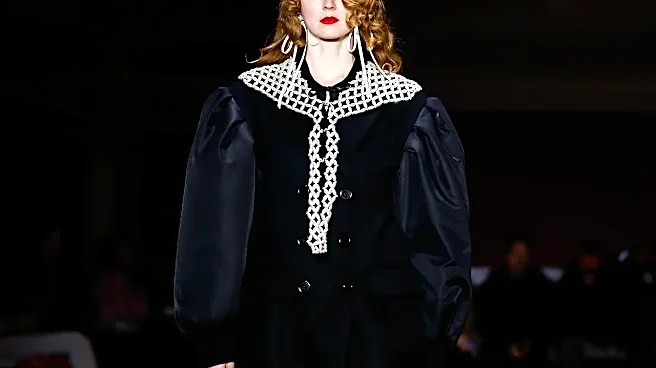
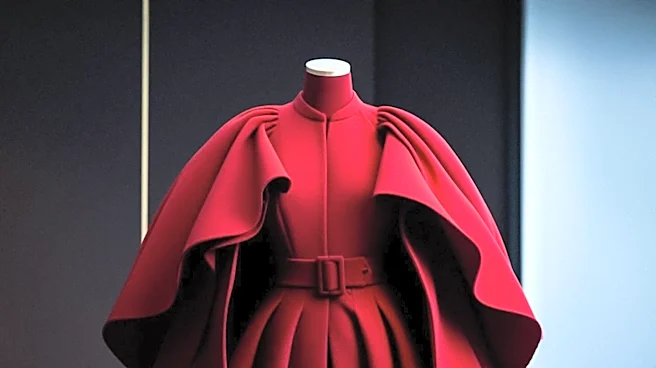
oversized, and asymmetrical garments—dubbed "Hiroshima chic" by a shocked press—they shared a core philosophy: to reject the West's conventional, body-hugging glamour. For a Yamamoto fan, Comme des Garçons is the most crucial next step. Where Yamamoto's work often feels poetic and flowing, Kawakubo’s is fiercely conceptual and architectural, treating the body as a canvas for abstract sculpture. She and Yamamoto were not just contemporaries; they were romantic and professional partners who pushed each other to redefine what clothing could be, making them two sides of the same revolutionary coin.
Ann Demeulemeester: The Romantic Poet
If Yamamoto is the philosopher-samurai of fashion, Ann Demeulemeester is its romantic, gothic poet. As one of the legendary Antwerp Six, she was heavily inspired by the Japanese wave that preceded her, sharing a love for asymmetry and a predominantly black palette. But Demeulemeester's work infuses the avant-garde with a softer, more lyrical sensibility. Her clothes are less about stark intellectual statements and more about creating a mood of languid elegance and rebellious romance. Think flowing layers, elegantly draped fabrics, and a punk-meets-Byron aesthetic. For the Yamamoto devotee drawn to the protective, enveloping quality of his clothes, Demeulemeester offers a world that is equally deep and nuanced, but with a distinctly European, bohemian soul. She famously said, "Black is poetic," a sentiment that echoes Yamamoto’s own devotion to the color.
Rick Owens: The Brutalist Showman
Often called "the Lord of Darkness," California-born Rick Owens takes the avant-garde principles of designers like Yamamoto and injects them with a dose of brutalist architecture and primal glamour. Like Yamamoto, Owens rejects conventional feminine silhouettes in favor of androgynous, architectural forms. He shares a similar dedication to a dark palette and masterful draping. However, where Yamamoto’s work is often an exercise in quiet, intellectual restraint, Owens’ is a performance. His designs are more aggressive, futuristic, and tied to a tribal, post-apocalyptic energy. Exploring Rick Owens is for the Yamamoto fan who is ready to turn up the volume. It’s a move from the silent poetry of a perfectly cut black coat to the roaring, distorted bass of a futuristic hymn. It's the same spirit of rebellion, just channeled through a different, louder amplifier.
Maison Margiela: The Cerebral Deconstructionist
Maison Margiela, founded by the famously anonymous Martin Margiela, is the ultimate destination for those fascinated by the 'how' and 'why' of clothing. While Yamamoto and Kawakubo deconstructed fashion's aesthetic norms, Margiela literally deconstructed the garments themselves. Inspired by the Japanese masters, his house made its name by exposing seams, showing linings, and repurposing vintage materials into couture creations. This is fashion as an intellectual exercise. For the Yamamoto admirer who appreciates the thought process behind the design—the questioning of form, function, and beauty—Margiela is a kindred spirit. The famous four white stitches on the back of a garment, a subtle anti-logo, symbolize this shared belief: that the clothes, and the ideas within them, are more important than the celebrity of the designer.