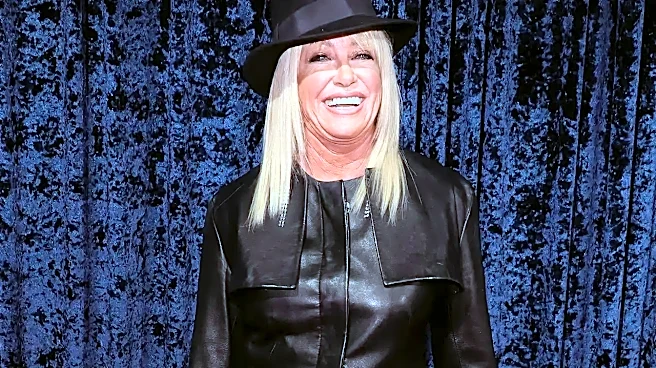









The Rise of Chrissy Snow
It’s hard to overstate the phenomenon that was 'Three's Company.' The sitcom, about two single women sharing an apartment with a man pretending to be gay, was a ratings juggernaut for ABC. While John Ritter and Joyce DeWitt were central to the comedy,
Suzanne Somers, as the bubbly and naive Chrissy Snow, became the show's breakout star. Her character was a pop culture sensation, and Somers quickly became one of the most recognizable faces in America. When the show began, she was reportedly thrilled with her initial salary of around $3,500 per week. But as the show's popularity exploded, so did her leverage—or so she thought.
A Groundbreaking Demand for Equal Pay
By the fifth season in 1980, Somers was a bona fide star earning $30,000 an episode. However, her male co-star, John Ritter, was reportedly earning $150,000 per episode. Seeing the disparity, Somers and her husband-manager, Alan Hamel, decided to take a stand. They demanded a raise to $150,000 an episode, plus 10% of the show's profits, to match what they believed Ritter was making. This wasn't just a salary negotiation; it was an early and very public push for pay equity in Hollywood, an industry where male leads were almost always paid significantly more. The move was bold and, at the time, virtually unprecedented.
The Studio's Hardball Response
The headline's claim of refusing "three sequels" is a dramatic interpretation of what happened next. In reality, she refused the terms to continue the series for future seasons. ABC, having just gone through contentious and costly negotiations with the female stars of 'Laverne & Shirley,' was determined not to set another precedent. The network flatly rejected Somers' demand, offering only a minimal $5,000 raise. When Somers protested by skipping work, the producers retaliated. They didn't fire her immediately. Instead, they marginalized her character, reducing Chrissy's screen time to 60-second cameos, often as a phone call tagged onto the end of an episode, filmed separately from the rest of the cast. After this public sidelining, her contract was not renewed, and she was effectively fired from the number-one show on television.
The Aftermath and a Different Kind of Win
The immediate aftermath was brutal. Somers was largely blacklisted in television for a time, with executives labeling her as "greedy" and "trouble." The incident strained her relationship with her castmates for decades, though she and John Ritter reconciled shortly before his death. But Somers and Hamel pivoted. She launched a successful Las Vegas residency and, most famously, became an entrepreneur. She became the face of the ThighMaster, turning the exercise device into a cultural phenomenon and a massive financial success. She went on to build a business empire through health books, beauty products, and other branding opportunities, eventually amassing a fortune estimated to be around $100 million. While she eventually returned to sitcoms with 'Step by Step' in the 1990s, her greatest success came from betting on herself outside the traditional Hollywood system that had cast her out.