






Not Just Another Origin Story
For years, the superhero genre has been a reliable engine for Hollywood, churning out spectacular, city-leveling conflicts and familiar character arcs. But audiences are growing weary of the multiverse-of-it-all. We’ve seen the heroic sacrifice, the CGI-heavy
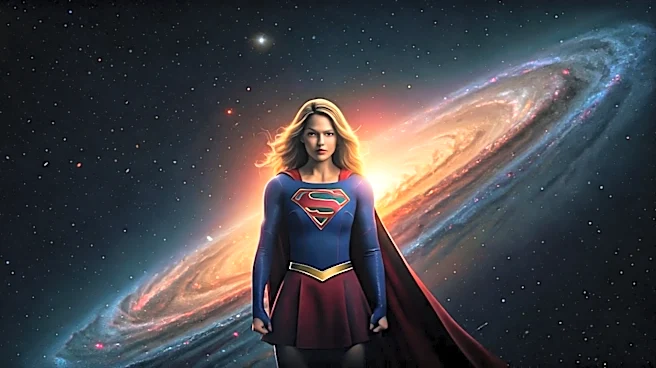
final battle, and the post-credits tease a dozen times over. The craving for something with more texture—more emotional weight—is palpable. This is the exact space that James Gunn’s new DC Universe is targeting with *Supergirl: Woman of Tomorrow*. Unlike most superhero introductions that re-hash an origin, this story picks up with a Kara Zor-El who has already lived a life. She’s not a wide-eyed newcomer discovering her powers; she’s a veteran of cosmic chaos, a survivor of a dead planet who grew up in the shadow of her more famous cousin. This film isn’t asking “How did she become Supergirl?” but rather, “What does it actually *feel* like to be her?” That shift in focus is the key to unlocking a different kind of movie.
The Source Material Is Everything
The film is based on the 2021-2022 comic series of the same name by Tom King and Bilquis Evely, a work celebrated for its stunning art and, more importantly, its literary tone. The story is a sci-fi Western, framed as a revenge quest narrated by a young alien girl named Ruthye. After her father is murdered, Ruthye seeks to hire the toughest off-worlder she can find to hunt down the culprits. She doesn’t find Superman; she finds his cousin, celebrating her 21st birthday by getting drunk in a dive bar on a planet with a red sun, temporarily powerless and full of rage. This isn't the cheerful, perpetually optimistic Supergirl of past iterations. This Kara is world-weary, cynical, and grappling with deep-seated trauma. The comic uses the framework of a spacefaring adventure to explore what it means to carry the weight of a lost world and an impossible legacy. It's less about punching villains and more about processing grief, questioning justice, and finding purpose in a galaxy that has taken everything from you. It’s the kind of character study that feels more like *True Grit* in space than *Justice League*.
A Different Kind of Hero
What makes this version of Supergirl so compelling is her flawed humanity. For decades, her primary role was to be “Superman’s cousin,” a character defined by her relationship to a more prominent male hero. *Woman of Tomorrow* reframes her entirely. Her power isn’t just her strength; it’s her endurance. She has witnessed horrors that Clark Kent, raised by loving parents on a peaceful farm, can only imagine. By focusing on this internal struggle, the story becomes universally relatable. You don’t need to know the minutiae of Kryptonian history to understand feeling like an outsider, dealing with loss, or questioning your place in the world. The sci-fi elements—the spaceships, the alien planets, the laser swords—become the backdrop for a deeply personal journey. This allows the film to appeal to an audience that might not care about comic book lore but will show up for a powerful story about a complex woman.
The Right Team for the Job
A great story on the page doesn’t always translate to the screen, but the creative team offers a reason for optimism. The film is a cornerstone of James Gunn and Peter Safran’s new DCU, with Gunn himself calling it a “big, science-fiction epic.” His success with *Guardians of the Galaxy* proved he could blend weird sci-fi, genuine heart, and character-driven humor. Attached to direct is Craig Gillespie, known for films like *I, Tonya* and *Cruella*—movies centered on fiercely independent, morally ambiguous female protagonists. He doesn’t make straightforward heroes; he makes fascinating, spiky people. In the lead role is Milly Alcock, who shot to stardom as the young, fiery Rhaenyra Targaryen in *House of the Dragon*. Alcock mastered the art of conveying deep-seated trauma and royal burden, a perfect resume for playing a Kryptonian survivor. This team isn't built to make a cookie-cutter superhero flick; it’s assembled to make a character-first drama on a blockbuster scale.