



The Common Culprit: 'Cut and Sew'
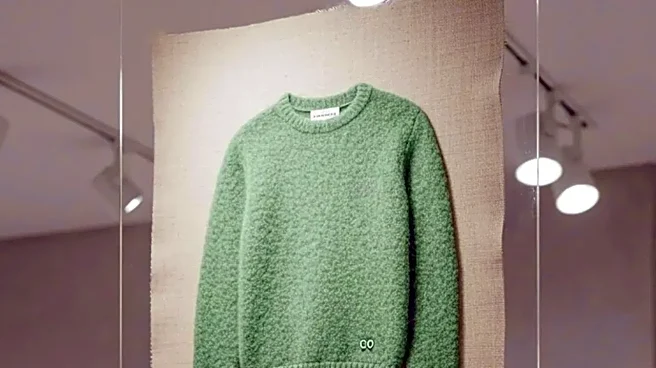
Most sweaters on the market are made using a method called 'cut and sew'. Imagine a giant sheet of knitted fabric, like a bolt of cloth. To make a sweater, a factory lays out patterns for the front, back, and sleeves, cuts them out, and then sews them together
with an overlock machine. It’s the same basic process used for making a t-shirt. This method is fast and cost-effective, which is why it's so common in mass-market fashion. The downside? It’s the primary source of that unwelcome bulk. The seams, particularly at the shoulders and armholes, are thick and rigid because the raw, cut edges of the knit fabric have to be folded over and heavily stitched to prevent them from unraveling. This creates a clumsy, less-than-ideal drape that adds visual weight exactly where you don’t want it.
The Refined Alternative: Fully Fashioned Knitting
The hallmark of a truly refined sweater is a technique called 'fully fashioned' construction. Instead of cutting from a large piece of fabric, each panel of the sweater—the front, the back, the sleeves—is knitted into its precise, individual shape directly on the machine. Stitches are strategically added or subtracted to create curves for the armhole or the slope of the shoulder. This process is more complex, time-consuming, and requires greater skill, which is why it's a signature of higher-quality and luxury knitwear. Because the panels are already shaped with finished, stable edges, there is no raw fabric to tuck away and no need for bulky stitching. It's a method that inherently produces a superior fit and less material waste.
The Star of the Show: The Linked Seam
Here’s the detail the headline promised. Once the fully fashioned panels are knit to shape, they aren't just sewn together; they are 'linked'. Linking is a meticulous process where a specialized machine joins the panels loop by loop. An operator manually places the individual knit loops from each panel onto the machine, which then creates a new row of stitches that joins them. The result is a flat, flexible, and almost invisible seam that feels like a continuation of the knit fabric itself. This is 'the knit seam' that separates the best from the rest. It allows the sweater to stretch and move with your body without any of the stiffness or bulk associated with cut-and-sew seams.
How to Be a Sweater Detective
You don't need to be a textile expert to spot the difference. The next time you're shopping, pick up a sweater and turn it inside out. Look at the seam where the sleeve joins the body. If you see a thick, raised ridge of thread, similar to the inside of a sweatshirt, you're looking at a cut-and-sew garment. Now, look for the good stuff. A linked seam on a fully fashioned sweater will be remarkably flat and neat. You'll see what looks like a discreet chain of stitches integrating the two pieces, with no bulky, folded_over fabric. Another giveaway for a fully fashioned piece are small, subtle dots or holes near the seam, known as 'fashioning marks'. These are where stitches were increased or decreased to shape the panel, a clear sign of quality craftsmanship.
Why It's Worth the Investment
A fully fashioned sweater with linked seams costs more for a reason. You're paying for the skill, the time, and the superior engineering of the garment. The payoff is threefold. First, the fit is unparalleled; the sweater drapes elegantly over your body's contours instead of fighting them. Second, it's more durable. Linked seams are as strong and flexible as the knit itself, meaning they are less likely to pull, pucker, or break over time. Finally, it's a matter of comfort. With no bulky ridges pressing into your skin, the sweater simply feels better to wear. It’s an investment in a piece that will not only look better but will also last longer in your wardrobe.