







The Yellow Card: A Formal Warning
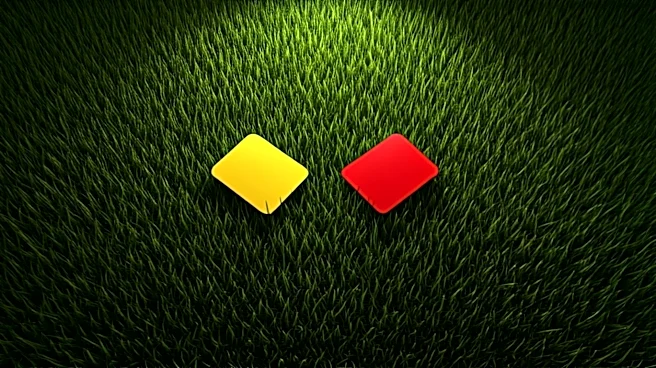
Think of a yellow card as a final warning shot across the bow. It’s the referee’s way of officially telling a player, “I see what you’re doing, and it stops now.” It’s not just for a bad tackle; it’s a tool for managing the game’s temperature and enforcing sportsmanship. A player is “cautioned” and shown a yellow card for a variety of offenses that break the rules but don’t quite rise to the level of pure malice. Common reasons include “unsporting behavior,” like a cynical trip to stop a promising attack, or “dissent by word or action,” which is the official term for arguing too aggressively with the ref. Other classic yellow-card offenses are persistently infringing the laws of the game (committing a lot of little fouls), delaying the restart
of play (kicking the ball away after a whistle), or failing to respect the required distance on a free kick or corner kick. The key takeaway is that the game continues, but the cautioned player is now walking a tightrope for the remainder of the match.
The Red Card: You're Outta Here
If a yellow card is a warning, a red card is the ejection button. When a player sees red, their game is over. They are “sent off,” meaning they must leave the field and surrounding area immediately. Crucially, their team is not allowed to replace them. For the rest of the match, their team must play with one fewer player, a massive disadvantage that often decides the outcome. There are two ways to get a red card. The first is by receiving a second yellow card in the same game. The ref will show the yellow, then immediately show the red. The combination of two “warning” offenses results in a sending-off. The second way is a “straight red” for a single, egregious offense. FIFA’s Laws of the Game list several of these, including serious foul play (a tackle that endangers an opponent's safety), violent conduct (punching, kicking, or head-butting an opponent off the ball), spitting, or denying an opponent an obvious goal-scoring opportunity with a handball or a foul (often called DOGSO by commentators). A straight red is reserved for actions that have no place in the game.
The Aftermath: Suspensions and Strategy
The punishment for a card doesn’t always end when the final whistle blows. A red card almost always comes with a suspension for at least the next match, and often more for severe offenses. This can be devastating for a team, especially if the suspended player is a star. Yellow cards have long-term consequences, too, particularly in tournaments like the World Cup or Euros. Competitions have rules about “yellow card accumulation.” A player who receives a certain number of yellow cards across several different games (for example, two yellows over three matches) will be suspended for the following game. This forces coaches and players to be strategic. A key player sitting on a yellow card might play more cautiously or even be substituted to avoid picking up a second one that would trigger a suspension for a crucial knockout-stage match. It adds a fascinating layer of tactical chess to the tournament.
The Gray Area: Referee's Discretion
While the rulebook provides a framework, the application of cards is as much an art as it is a science. This is where the referee’s discretion becomes the most debated topic in any sports bar. Was that tackle just a foul, or was it reckless enough for a yellow? Was that high kick endangering the opponent, or was it a legitimate attempt to play the ball? Referees must judge a player's intent, the level of force used, and the context of the game in a split second. This human element is why you see players plead their case and fans from opposing teams view the same foul completely differently. One team’s “tough but fair challenge” is another’s “clear yellow card.” Understanding that this gray area exists is key to understanding why cards are a constant source of drama and debate. The referee’s job isn’t just to enforce rules, but to interpret them to maintain control and ensure the game is played fairly and safely.