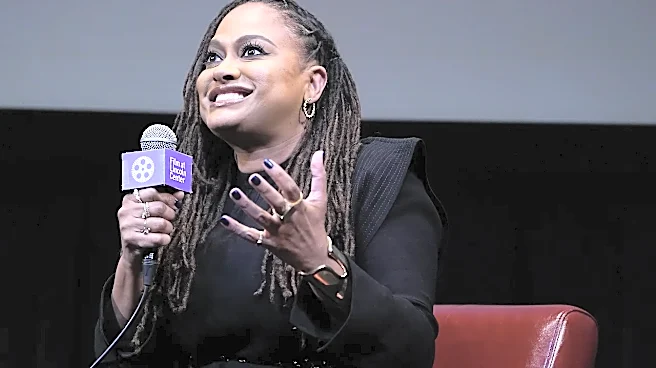

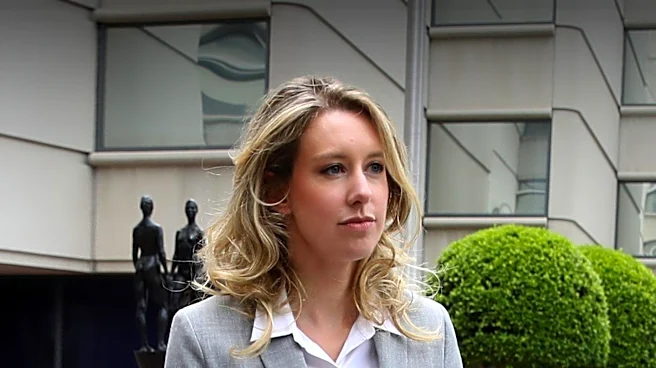
Ava DuVernay is more than a director; she’s a cinematic force whose films feel urgent and essential. A key part of her power is her visual language—framing historical moments with epic grace and personal stories with deep empathy.
Bradford Young: The Poet of Natural Light
If there's one cinematographer
whose work is intrinsically linked to DuVernay's, it's Bradford Young. Their collaboration on 'Selma' and 'When They See Us' redefined how recent history could be rendered on screen. Young is a master of using available and natural light, creating images that are soft, painterly, and deeply human. He has a signature style of underexposing his shots, a technique that enriches skin tones and creates a feeling of intimacy and immediacy. This approach favors bounced light over harsh, direct sources, resulting in a look that feels both poetic and raw. His philosophy is to get out of the way of the story, allowing the visuals to serve the emotion rather than overpower it. For fans of DuVernay’s ability to find the profound in the personal, Young’s entire filmography, including 'Arrival' and 'Ain't Them Bodies Saints,' is essential viewing.
Kira Kelly: The Empathetic Collaborator
A frequent DuVernay collaborator, Kira Kelly was a director of photography on the searing documentary '13th' and the acclaimed series 'Queen Sugar'. Her involvement earned her an Emmy nomination and established her as a go-to DP for projects that demand a sharp, incisive eye coupled with a strong sense of social justice. Kelly’s journey began as an electrician and gaffer, giving her a ground-up understanding of how to shape light to serve a story. She was famously hired by DuVernay after a connection on social media, a testament to a shared artistic vision. Her work, which also includes 'Insecure' and 'Self Made', is known for its ability to capture iconic images that feel both authentic and monumental. In 2020, she became the first Black woman invited into the prestigious American Society of Cinematographers, a landmark achievement.
Matthew J. Lloyd: The Versatile Visionary
Matthew J. Lloyd has demonstrated incredible range, from the gritty world of Marvel's 'Daredevil' series to the globe-trotting scale of 'Spider-Man: Far From Home'. But his recent collaborations with DuVernay on projects like 'Origin' showcase their shared ambition to create a unified, empathetic visual language across different time periods and locations. For 'Origin', their goal was to make the lighting feel as unobtrusive as possible, allowing the actors and the environments to shape the visual mood naturally. This meant forgoing artificial looks for different eras and instead leaning into a consistent, naturalistic style that ties a German book burning to a ceremony in India. This approach aligns perfectly with DuVernay’s focus on the 'singular lived experience,' creating a visual through-line that connects disparate human stories.
Rachel Morrison: The Groundbreaking Naturalist
Rachel Morrison made history as the first woman ever nominated for the Academy Award for Best Cinematography for her stunning work on Dee Rees' 'Mudbound'. Her style can be described as 'subjective naturalism,' where she uses lighting and composition to reflect a character's inner state. For 'Mudbound', she was inspired by the gritty, high-contrast photos of Depression-era documentarians like Gordon Parks and Dorothea Lange, giving the digital film a historical, textured feel. Her work on 'Black Panther' and 'Fruitvale Station' with director Ryan Coogler further demonstrates her ability to blend epic scale with intimate, character-driven moments. Like DuVernay, Morrison is a storyteller first, using the camera to channel a story's core emotion into unforgettable imagery.
James Laxton: The Master of Intimacy and Color
Known for his breathtaking work on Barry Jenkins' 'Moonlight,' James Laxton is a master of crafting visual poetry. His cinematography is defined by its use of rich, expressive color and intimate, immersive camerawork. In 'Moonlight', the use of deep blues and purples, combined with soft, golden light in moments of connection, creates a dreamlike atmosphere that is both beautiful and emotionally raw. Laxton often uses wide-angle lenses very close to the actors, a technique that creates a profound sense of intimacy and forces the audience to connect with the characters' vulnerability. This focus on emotional immersion and a character's subjective experience, often having them look directly into the lens, resonates deeply with how DuVernay frames her subjects with dignity and grace.