

Every year, as turkey and stuffing recipes fill our feeds, a different kind of Thanksgiving tradition sparks debate: Is Martin Scorsese’s 'The Last Waltz' a holiday movie? The answer isn't as simple as checking for pilgrims or pumpkin pie.
The Unlikely Contender
On the surface,
the argument seems thin. Martin Scorsese’s 1978 masterpiece is a concert documentary, not a holiday narrative. There are no family dinner scenes, no heartfelt speeches about gratitude, and certainly no turkeys being pardoned. It’s a film about the end of a band—The Band, to be precise—worn down by 16 years on the road. It features electrifying, sometimes chaotic performances from some of the biggest names in 20th-century music, from Bob Dylan and Joni Mitchell to Muddy Waters and Van Morrison. Yet, for a growing number of people, watching this film has become as essential to the fourth Thursday in November as 'Planes, Trains and Automobiles'. The case for 'The Last Waltz' as a Thanksgiving classic goes deeper than its plot, tapping into the very spirit of the holiday.
It Literally Happened on Thanksgiving
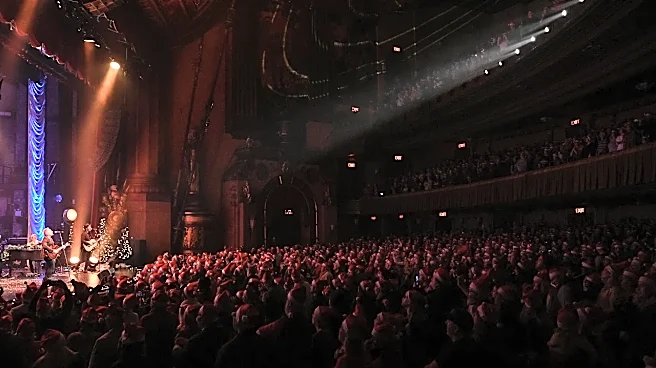
The most straightforward piece of evidence is the date itself. The concert at the heart of the film was held on Thanksgiving Day, November 25, 1976, at the Winterland Ballroom in San Francisco. This wasn't just a gig; it was an event. Promoter Bill Graham arranged for the 5,000 attendees to be served a full turkey dinner before the music started. The night was billed as a celebration, a farewell feast. The Band wasn't just ending their touring career; they were hosting a party to mark the occasion. That foundational fact anchors the film to the holiday in a way that’s impossible to ignore. It’s not a movie about Thanksgiving, but it is a movie that is Thanksgiving.
A Feast of American Music
Thanksgiving is, at its core, a harvest festival—a celebration of abundance. 'The Last Waltz' offers a similar kind of bounty. Spanning rock, blues, folk, country, and gospel, the concert is a sprawling feast of American popular music. Robbie Robertson’s vision was to invite artists who had profoundly influenced The Band, creating a living history of the sounds that shaped them. You get the raw power of Muddy Waters, the poetic grace of Joni Mitchell, the Celtic soul of Van Morrison, and the enigmatic presence of Bob Dylan, all on one stage. Like a Thanksgiving table laden with diverse dishes, the film presents a dizzying, joyous, and almost overwhelming spread of cultural richness. It's a harvest of a uniquely American art form, served up by some of its greatest practitioners.
A Very Complicated Family Reunion
What is Thanksgiving if not a sometimes messy, emotionally complex gathering of a chosen or given family? 'The Last Waltz' perfectly captures this dynamic. While the performances are triumphant, Scorsese’s interviews reveal a group of men at a crossroads, bound by history but frayed by experience. The palpable tension, particularly the well-documented friction between Robbie Robertson and Levon Helm over the decision to stop touring, mirrors the undercurrents present at many holiday tables. There's love and deep camaraderie, but also resentment, nostalgia, and a sense of an ending. You see it in the way they interact, the stories they tell, and the ones they don't. It’s a portrait of a family on the verge of breaking apart, gathering for one last, spectacular, and poignant celebration.
The Gratitude and the Goodbye
Beyond the food and family, Thanksgiving is a time for reflection—a pause to look back on the year before the quiet of winter sets in. 'The Last Waltz' is steeped in this autumnal feeling of finality. Robertson repeatedly frames the concert as a necessary end to a chapter, a recognition that 'the road has taken a lot of the great ones'. The entire film is an elegy, a fond and mournful look back at a legendary career. It's about taking stock, expressing gratitude for the journey, and saying goodbye. When the show concludes in the early morning hours and The Band plays its final encore, it isn't just the end of a concert; it’s the end of an era. That blend of celebration and melancholy is the emotional core of both the film and the holiday itself.