






1. The 'Carré Magique' and Midfield Artistry
In the 1980s, most top teams played with wingers and a rigid formation. Then came France’s “Carré Magique,” or Magic Square. In the 1982 and 1986 World Cups, manager Michel Hidalgo built his team not around strikers, but around four world-class attacking
midfielders: Michel Platini, Alain Giresse, Jean Tigana, and Luis Fernández. They played a fluid, possession-based game that was beautiful to watch and incredibly difficult to defend against. While they fell short of the final in two epic semifinal defeats to West Germany, their influence was profound. They proved a team could dominate games through technical excellence and control of the midfield, paving the way for the tactical philosophies of future teams like Pep Guardiola's Barcelona. The Magic Square was a tactical blueprint for winning the heart, even if they couldn't win the trophy.
2. 1998: The Multicultural Masterpiece
When France hosted the World Cup in 1998, the national team was a reflection of a changing country. Led by the transcendent Zinedine Zidane, the son of Algerian immigrants, the team was dubbed “Black, Blanc, Beur” (Black, White, Arab)—a celebration of its diverse roots. On the pitch, they were a powerhouse, blending defensive steel with attacking flair. Their 3-0 victory over Brazil in the final, powered by two Zidane headers, was more than a sporting achievement. It became a unifying social and political event, offering a powerful, optimistic vision of a multicultural France. For modern soccer, it cemented the idea that national identity could be inclusive and that immigrant communities were an essential source of world-class talent, a model now embraced by nearly every top European nation.
3. 2006: Zidane’s Infamous Final Act
Zinedine Zidane’s career was supposed to end in perfect glory. After retiring from international soccer, he returned to drag a struggling French team all the way to the 2006 World Cup final against Italy. He even scored an audacious Panenka penalty early in the match. But in extra time, his legacy was forever complicated. After being verbally provoked by Italian defender Marco Materazzi, Zidane turned and drove his head into Materazzi’s chest, earning a shocking red card. France went on to lose the final on penalties. The headbutt became one of the most infamous and analyzed moments in sports history, a viral event before the social media age truly exploded. It was a raw, humanizing, and tragic end to a legendary career, serving as a permanent lesson on the razor's edge between genius and impulse that defines the world's biggest sporting stages.
4. 2010: The Mutiny That Forced a Reckoning
If 1998 was the dream, 2010 was the nightmare. At the World Cup in South Africa, the French squad completely imploded. Following a dispute between striker Nicolas Anelka and coach Raymond Domenech, the players staged a full-blown mutiny. They refused to train, remaining on the team bus in an act of protest known as the Knysna incident. The rebellion, broadcast to a shocked world, resulted in national disgrace and an embarrassing group-stage exit. This chapter, however, had a crucial legacy. The scandal forced a top-to-bottom reform of the French Football Federation (FFF). It became a cautionary tale for every national team about the dangers of player egos, weak leadership, and internal division. The clean-up that followed laid the groundwork for the disciplined, professional structure that would eventually lead France back to glory.
5. 2018: The Pragmatic Triumph of a New Era
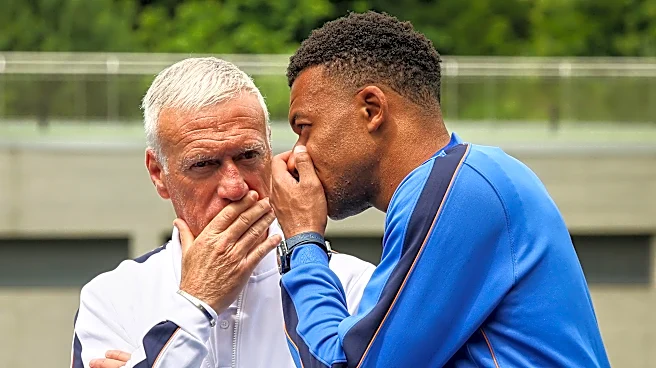
The team that won the 2018 World Cup in Russia was the ultimate expression of modern French soccer. Coached by 1998 captain Didier Deschamps, this was not a team of romantic idealists but of pragmatic, athletic, and tactically versatile winners. They could dominate possession or, more often, absorb pressure and strike with devastating speed on the counter-attack, a style personified by their teenage superstar, Kylian Mbappé. His explosive performance announced the arrival of soccer’s next global icon. The victory was a triumph of France's world-leading youth development system, which consistently produces more elite players than any other nation. It established a new template for international success: build a deep, athletic talent pool, stay organized, and unleash your game-breaking superstar at the perfect moment.