

A 'Festival of Festivals' Is Born
The story begins in 1957, born from a conversation among film critics who felt London needed a major film event to rival Cannes and Venice. The first London Film Festival was designed as a 'festival of festivals', a curated showcase bringing the best
of the international circuit to a British audience. Held at the brand-new National Film Theatre, its inaugural lineup of just 15 films included now-iconic works like Akira Kurosawa's 'Throne of Blood' and Ingmar Bergman's 'The Seventh Seal'. It was a small, cinephile-focused affair, reflecting a post-war era when access to world cinema was a novelty and the art-house director was king. Its mission was clear: to open a window to a world of film that audiences might not otherwise see.
Championing New Voices and Controversy
By the 1970s, the festival had found a bolder identity. It wasn't just showing established hits; it was becoming a launchpad for undiscovered talent and a forum for debate. In 1970, for instance, most of the films shown had not yet secured UK distribution, establishing the LFF as a crucial tastemaker. This was the decade it first introduced audiences to a young David Lynch and wasn't afraid of controversial screenings, like 'The Texas Chain Saw Massacre', which was shown to a members-only audience due to censorship issues. The festival began to mirror a film culture grappling with new, often provocative, authorial voices and a move away from the old studio system, proving that a festival could be a place of discovery, not just exhibition.
Growing Pains and Gala Premieres
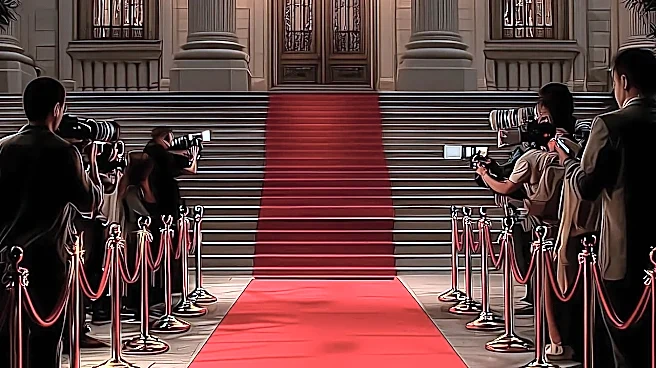
The 1980s and '90s marked a period of significant expansion. The festival started adding more venues across London and even taking select films to cinemas across the UK. This era also saw the introduction of the opening and closing night galas, which transformed the LFF from a quiet affair into a major red-carpet event. While still programming art-house classics, it also began to embrace more mainstream films, reflecting the shifting economics of the film industry. In 2009, a standalone awards ceremony was established, cementing its status on the international stage and moving beyond its original, non-competitive model. This shift mirrored the '90s boom in independent film and the growing importance of festivals as marketing platforms for awards season.
Navigating the Digital Revolution
The 21st century brought the biggest disruption yet: digital technology. As filmmaking democratized and streaming services began to challenge theatrical distribution, the LFF had to adapt again. It expanded its footprint with a UK-wide program and embraced a hybrid model of in-person and online screenings, a change accelerated by the pandemic. Crucially, it broadened its definition of 'cinema'. The festival now includes a 'Series' strand for television and episodic content and 'LFF Expanded' for immersive storytelling, featuring virtual reality, AI-driven art, and video games. This reflects the current reality where creative storytelling is no longer confined to the traditional movie screen.
A Festival for a New Era
As it celebrates its 70th edition in October 2026, the BFI London Film Festival looks very different from its 1957 inception. The program is now organized into thematic strands like 'Love', 'Debate', and 'Thrill' to help audiences navigate a huge selection of global films. There is a strong emphasis on diversity and inclusion, with a significant percentage of films directed by women and a program representing dozens of countries. The modern festival is also a major industry event, with forums and showcases designed to connect UK talent with international partners. It has evolved from a simple showcase into a sprawling, multi-faceted event that reflects the complex, global, and multi-platform nature of contemporary film culture.