







Our Next Science Class: A Mission to Tau Ceti
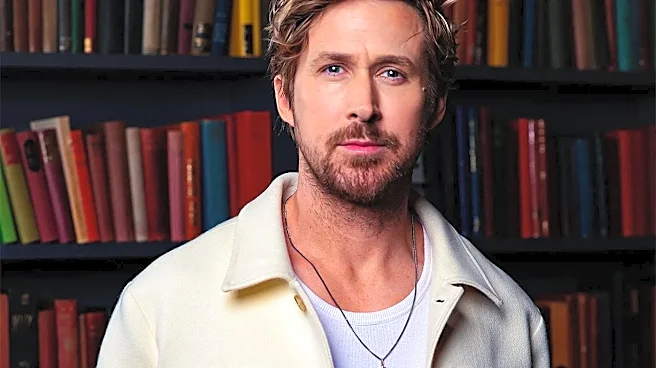
Based on the best-selling novel by Andy Weir, author of 'The Martian,' the upcoming film 'Project Hail Mary' is not your average space adventure. The plot centers on Ryland Grace (Gosling), a former science teacher who wakes up alone on a spaceship, light-years
from home, with no memory of his mission. The stakes? An extraterrestrial microbe called 'Astrophage' is literally eating the sun, threatening Earth with a new ice age. Grace must use the scientific method to figure out why a nearby star, Tau Ceti, is immune and somehow save humanity. The story is packed with dense, real-world scientific principles, from astrobiology and time dilation to the physics of interstellar travel. It’s a narrative where the science isn't just background detail; it is the plot.
The Power of Understatement
This is where Gosling’s unique appeal comes in. For years, his acting has been defined by a certain stillness and restraint. Think of his roles in 'Drive' or 'Blade Runner 2049,' where he communicates volumes with a subtle glance or a tightened jaw. Even in his comedic turns, like 'Barbie' or 'The Nice Guys,' the humor often comes from his deadpan reaction to absurd circumstances. This isn’t a lack of emotion, but a controlled, internalized performance style that invites the audience to lean in. In a world saturated with over-the-top enthusiasm, this quiet confidence can be surprisingly effective. It doesn't condescend; instead, it creates a sense of shared discovery, making complex topics feel less intimidating and more accessible.
Not Your Father’s Science Guy
For decades, science communication has been dominated by a specific archetype: the high-energy, infectiously enthusiastic expert. Think Bill Nye bow-tying his way through physics or Carl Sagan’s wide-eyed wonder. While effective, that style can sometimes feel performative to a generation skeptical of anything that tries too hard. Gosling represents the opposite approach. His character in 'Project Hail Mary' isn't a chiseled hero; he's a reluctant bench scientist. This grounds the extraordinary story in something authentic. Studies have shown that humor, particularly dry or understated humor, can increase engagement, build trust, and make information more memorable. By avoiding an overly aggressive or preachy tone, a communicator can humanize themselves and make an audience more receptive, especially to complex or challenging ideas.
Edutainment Goes Prestige
Hollywood has long played a role in shaping public perception of science, but films like 'Interstellar,' 'The Martian,' and now 'Project Hail Mary' represent a new era of prestige edutainment. These aren't just action movies with a sci-fi gloss; they are meticulously researched stories that embed complex scientific concepts directly into their narrative DNA. The casting of an actor like Gosling is a deliberate choice. He brings not only star power but a specific persona that redefines what a science-driven hero can be. Instead of a genius who talks down to the audience, we get an everyman—albeit a very famous one—who figures things out alongside us. His character is motivated less by conventional heroics and more by a pure, unburdened curiosity, a core tenet of the scientific method itself.