




Color Is a Declaration of War
In the world of fantasy television, color is rarely a simple aesthetic choice; it’s a uniform, a political statement, and often, a warning. No show demonstrates this better than 'House of the Dragon', where the battle for the Iron Throne is fought as much
in the wardrobe department as it is on the battlefield. When Queen Alicent Hightower arrives at a royal wedding wearing a striking green gown, it’s a gasp-inducing moment that has nothing to do with fashion and everything to do with power. Green is the color her family, House Hightower, uses to call its banners to war. In that one moment, she declares her independence from her husband's family, the Targaryens, and draws a line in the sand. From then on, the court is divided into the 'Greens' (Alicent's faction) and the 'Blacks', who support Princess Rhaenyra and her Targaryen birthright, signified by her adherence to the house colors of black and red. This color-coding becomes an instant visual shorthand for the audience, clarifying complex allegiances without a single word of exposition.
Fabric and Texture Reveal Status
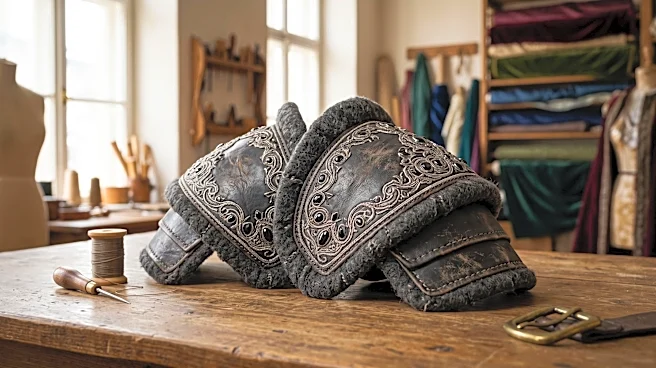
The material of a garment is a direct line to a character's social standing and their relationship with the world they inhabit. The opulent, heavy velvets and intricate brocades seen in the courts of King's Landing or Númenor in 'The Rings of Power' speak of immense wealth and a life insulated from physical labor. Contrast that with the costumes of the Harfoots, the nomadic ancestors to the Hobbits. Their clothing is designed to look like it's part of the natural environment, using muted, earthy tones and textures that allow them to blend into the landscape, a crucial survival trait. Similarly, a monster hunter like Geralt of Rivia from 'The Witcher' is defined by his practical, hard-wearing leather armor. It's functional, scarred, and built for a life of constant battle, not for courtly leisure. The very texture of a costume—be it the whisper of silk or the stiffness of boiled leather—tells you who a character is before they even speak.
Silhouette Is Power (Or Lack Thereof)
The shape of a costume, its silhouette, is another key tool for conveying a character’s journey and power level. Costume designers intentionally manipulate outlines to show a character's rise or fall. In 'House of the Dragon', King Viserys begins the series with strong, square-shouldered outfits that create a powerful, solid shape. As his health decays, his costumes become rounded, heavier, and appear to weigh him down, visually representing his loss of vitality. Conversely, his wife, Alicent, begins in softer, more youthful dresses, but as she consolidates power, her gowns become more structured and squared at the shoulders, creating an imposing and severe silhouette that mirrors her growing political influence. Rhaenyra, meanwhile, often adopts more masculine styles, including pants and doublets, to assert her status as a ruler in a patriarchal world, a visual flex to signal she's as capable as any king.
The Secret Language of Small Details
The true genius of fantasy costuming often lies in the details that reward the most observant viewers. Embroidery, jewelry, and tiny motifs can carry immense narrative weight, hinting at a character's origins, beliefs, or even foreshadowing future events. In 'The Rings of Power', the Elven armor is adorned with intricate, leaf-like patterns and script, reflecting their deep connection to nature and ancient lore, while Dwarven attire features geometric patterns and gold, signifying their mastery of smithing and their home deep within the mountains. In 'House of the Dragon', Rhaenyra’s gowns feature subtle dragon-scale textures and she frequently wears a necklace with the Targaryen sigil, a constant, defiant reminder of her claim to the throne. These are not just decorative elements; they are layers of world-building stitched directly into the fabric, turning every costume into a piece of readable lore.