


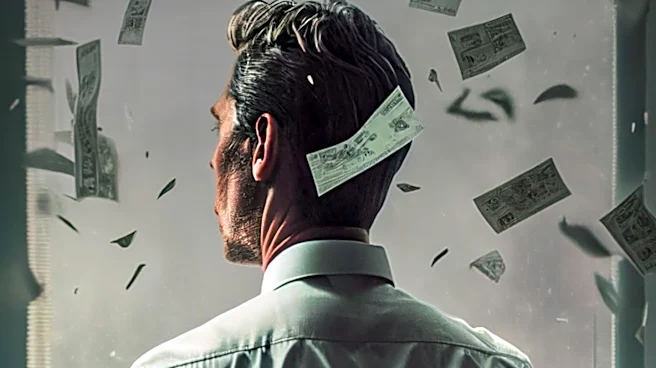


The 2018 dark comedy 'The Oath' presents a terrifyingly plausible scenario: what if the government asked every citizen to sign a loyalty pledge? Set during Thanksgiving, the film turns a family gathering into a political pressure cooker.
The Premise: A Pledge and a Deadline
In the world of
'The Oath,' the U.S. government has issued the 'Patriot's Oath,' a voluntary pledge of loyalty to the President. While not mandatory, there are incentives like tax credits for signing, and a firm deadline is set for Black Friday, the day after Thanksgiving. The story centers on Chris (Ike Barinholtz, who also wrote and directed), a self-described progressive news junkie who is morally outraged by the pledge. His wife, Kai (Tiffany Haddish), is more pragmatic but shares his liberal leanings. The looming deadline and the couple's refusal to sign set the stage for a holiday weekend fraught with tension, as they prepare to host family members with conflicting political views.
Thanksgiving as the Perfect Cauldron
Setting the film during Thanksgiving is a stroke of genius. The holiday is an American institution built around the ideal of unity, gratitude, and putting differences aside. But as many families know, it often becomes a battleground for simmering resentments and political arguments. In 'The Oath,' this dynamic is magnified to an extreme. Chris’s mother makes him promise not to discuss politics, a rule he is psychologically incapable of following. The arrival of his conservative brother, Pat (Jon Barinholtz), and Pat's outspoken girlfriend, Abbie (Meredith Hagner), turns the dinner table into a minefield of passive-aggression and outright hostility. The pledge isn't just a news item; it's a guest at the table, forcing everyone to confront their beliefs.
The Pledge as a Personal Litmus Test
The true poison of the loyalty pledge is how it transforms an abstract political debate into a concrete, personal allegiance test. It’s no longer about who you voted for or what news channel you watch; it’s about whether you will publicly sign a document that others see as either a patriotic duty or an act of submission. When Chris discovers that his family members, and eventually even his wife, have signed the oath, his sense of betrayal is palpable. The pledge forces a clear division, drawing a line not just between citizens and their government, but between family members sharing a meal. It eliminates nuance and demands a simple 'yes' or 'no,' making it impossible to 'agree to disagree.' The conflict stops being about ideas and becomes about personal loyalty and perceived moral failure.
From Awkward Dinner to Home Invasion
The film masterfully escalates from uncomfortable family satire to a tense home-invasion thriller. On Black Friday, two agents from the newly formed 'Citizens Protection Unit' (CPU) arrive at the house to question Chris about his refusal to sign. The encounter, sparked by an anonymous tip likely from a family member, quickly spirals out of control. What began as a verbal spat over turkey and stuffing devolves into a violent standoff involving tasers, duct tape, and drawn weapons. This terrifying shift illustrates the film's central argument: when political division is supercharged by state power, it doesn't just stay in the public square. It breaks down your door, invades your living room, and turns a family holiday into a hostage situation. The pledge becomes the justification for the state to police dissent within the sacred space of the home.