




More Than Just a Song
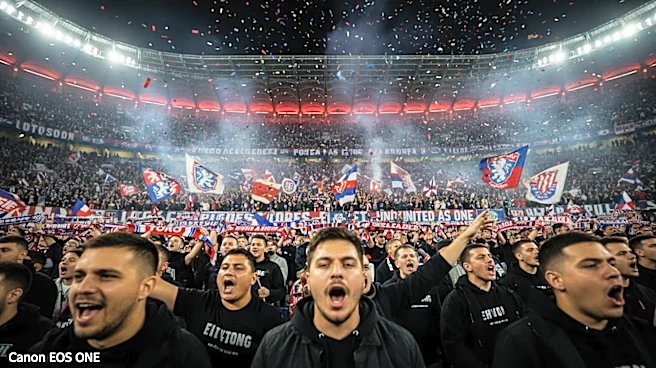
Every major soccer tournament has its official, slickly produced anthem, often featuring global music superstars. These songs play in stadiums and on broadcasts, but they rarely capture the true soul of the event. The real magic happens in the stands,
where fans create their own soundtracks. These unofficial anthems are more than just background noise; they are raw, authentic expressions of hope, pride, and identity. For a small nation, a country with little geopolitical weight or global recognition, a viral fan chant can become a form of cultural diplomacy. It’s a way to announce their arrival on the world stage, not with political maneuvering, but with a melody so infectious it can’t be ignored. These are not corporate jingles; they are folk songs for the modern age, capable of telling a nation's story to billions.
Case Study: The Icelandic Thunderclap
The perfect example is the “Viking Clap” that defined Euro 2016. Iceland, a nation with a population of just over 330,000, defied all odds to reach the quarterfinals, famously knocking out England along the way. But their on-field heroics were matched by the spectacle in the stands. After each match, the players would join their thousands of traveling fans in a powerful, synchronized ritual: a slow, rhythmic clap accompanied by a guttural “HUH!” that grew progressively faster and louder. The sound was mesmerizing, primal, and deeply moving. It symbolized the unbreakable bond between the team and its supporters and projected an image of unity and strength. Ironically, the chant wasn’t an ancient Viking tradition but was adopted by an Icelandic club team after seeing fans of the Scottish club Motherwell perform it. Yet, on the global stage of Euro 2016, it became Iceland’s unique signature, a sound that instantly told the world who they were: a small nation with a colossal spirit.
The Unofficial Anthem Playbook
So, what does it take for a fan chant to go from a stadium terrace to a global phenomenon? The formula seems to require a few key ingredients. First and foremost, you need a compelling underdog story. The chant gains its power from the narrative of a smaller team achieving unexpected success. Second, the song or chant itself must be incredibly simple and participatory. The Viking Clap required no musical ability, just a willingness to join in. This communal aspect is crucial; it’s not for passive listening, but for active creation. Finally, you need a signature moment—a giant-killing victory or a dramatic goal—that amplifies the sound and puts it in front of a massive television audience. In the age of social media, that’s all it takes for a chant to spread from the stands to screens around the world, where it takes on a life of its own.
When a Meme Becomes an Identity
Sometimes, the story is less about stoic defiance and more about pure, unadulterated fun. At the very same tournament, fans from Northern Ireland created their own global hit with “Will Grigg’s on Fire.” Set to the tune of the 1996 dance hit “Freed from Desire,” the chant celebrated their striker, Will Grigg, who had been in prolific form for his club, Wigan Athletic. The chant was absurdly catchy: “Will Grigg’s on fire, your defense is terrified!” It went viral, becoming the unofficial song of the tournament. The ultimate irony? Will Grigg didn't play a single minute at Euro 2016. It didn't matter. The song wasn't just about him anymore; it was about the joy and humor of the Northern Irish fans, who were in a major tournament for the first time in 30 years. It was a celebration of the moment, a joke so good that even opposing fans couldn't help but sing along, giving a small nation a massive cultural footprint.