





A Tale of Two Philosophies
The core of the issue isn't just that one clock counts up and the other doesn't exist (or didn't, until recently). It's about the fundamental philosophy of time in each sport. Soccer is a game of continuous flow. For 45 minutes, the ball is ideally in constant
motion, a fluid narrative of attacks and retreats. The clock reflects this; it runs relentlessly, just like the players. It doesn't stop for a throw-in, a corner kick, or a minor foul. The game’s rhythm is paramount, and the clock is its metronome. Baseball, by contrast, is a game of discrete moments. It’s a series of self-contained, high-stakes events: the pitch, the swing, the fielding play. The action happens in explosive bursts, separated by periods of strategic resetting. There is no “flow” in the soccer sense. The drama isn't in the continuous passage of time, but in the singular confrontation between pitcher and batter, repeated over and over. A timeless game for a sport built on individual moments, not a collective, flowing effort.
The Enigma of Stoppage Time
This brings us to the most confusing part for outsiders: stoppage time, or as it's officially known, 'added time.' While the clock runs continuously, the referee mentally notes the time lost to significant delays—injuries, substitutions, lengthy goal celebrations, and now, VAR reviews. At the end of each half, the fourth official holds up a board indicating the *minimum* number of additional minutes to be played. This is where MLB fans truly get baffled. It’s not a hard number. The game ends not when the clock hits a specific second, but when the referee decides the added time (and any delays within it) has been completed. It's subjective, mysterious, and entirely in the hands of one person. For a baseball fan used to the certainty of three outs defining an inning, this discretionary power over the game's end feels almost arbitrary.
When Baseball Finally Got a Clock
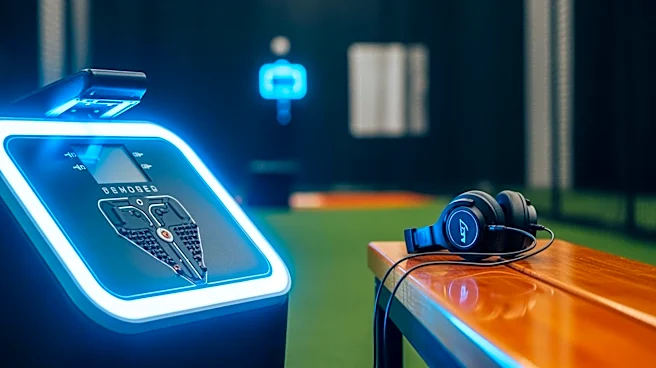
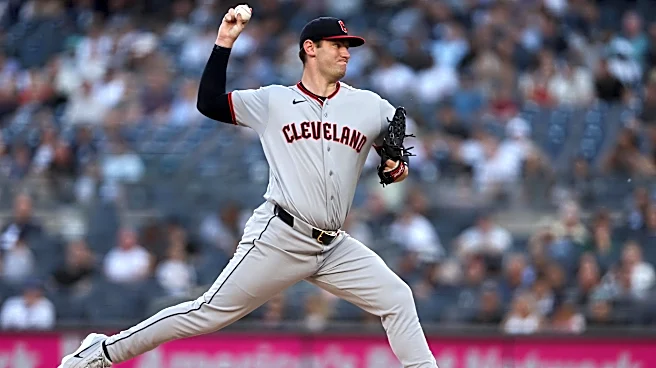
The irony is that this entire conversation has been supercharged by baseball's own recent identity crisis with time. For over a century, MLB's lack of a game clock was a defining feature, a pastoral escape from the tyranny of modern schedules. Games could be a crisp two-and-a-half hours or a meandering four-hour marathon. But in 2023, MLB introduced the pitch clock to combat lagging pace of play. Pitchers now have 15-20 seconds to begin their motion, and batters must be ready. This was a seismic cultural shift. It injected a sense of urgency that was previously alien to the sport. Suddenly, baseball fans had to contend with a clock governing the action, making the old comparison to soccer even more potent. It proved that the 'timeless' nature of baseball was a choice, not a necessity.
The Psychology of Fan Anxiety
Ultimately, the strange feeling comes down to fan psychology. In soccer, the running clock creates a constant, low-grade tension that builds to a frantic crescendo as the 90th minute approaches. Hope and despair are tied to a number that keeps ticking up, with the ambiguous promise of a few extra minutes. Your team is down a goal at 88:00, and you're screaming for the referee to add five minutes. Your team is up a goal, and you're praying for the final whistle after 30 seconds of stoppage time. In baseball, the anxiety is different. It’s the acute stress of a 3-2 count with the bases loaded. It’s not about how much time is left; it's about the immediate outcome of the next event. One sport is a rising tide of pressure; the other is a series of lightning strikes.