








The Phantom Celebration
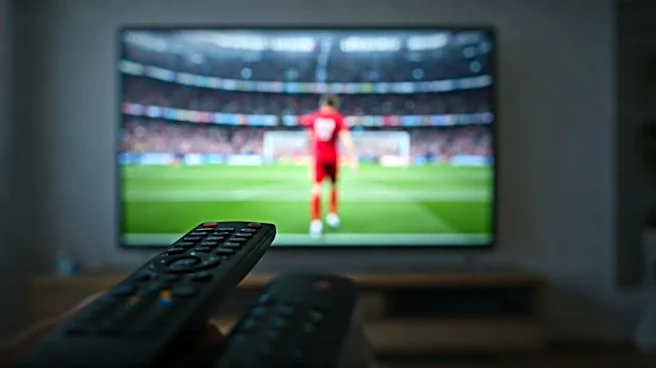
It’s a scenario familiar to millions of U.S. sports fans. You’re glued to your laptop or smart TV, streaming the biggest game of the year. The tension is unbearable. Suddenly, a muffled cheer comes through your wall or window. A few seconds later, your phone
buzzes with a notification from a friend: “GOAL!!!” And then, finally, the player on your screen scores the goal your neighbor and friends celebrated nearly a minute ago. This phenomenon is known as streaming latency, and it’s the unavoidable price many of us pay for the convenience of watching sports over the internet. It’s not a glitch in your specific service; it’s a fundamental feature of how internet video works compared to old-school broadcasting.
The Direct Highway vs. The Winding Road
Think of traditional broadcast TV (cable, satellite, or over-the-air antenna) as a direct, one-way highway. The signal leaves the broadcaster’s tower or satellite uplink and travels in a relatively straight line to a receiver at your local cable company or directly to your home. It’s a massive, continuous data flow sent to everyone at once. The delay is minimal, usually just a few seconds from the live action in the stadium.
Internet streaming, on the other hand, is like a complex delivery service with multiple stops. Instead of one massive signal, the live video has to be broken down into tiny packets of data, sent through a global maze of servers, and then reassembled on your device in the correct order. This journey is more personalized but also much, much slower.
The Journey of a Single Packet
So what actually happens in those 30 to 90 seconds of delay? First, the video from the stadium camera has to be compressed and encoded for internet delivery. This process alone adds a few seconds. Next, that encoded video is sent to a Content Delivery Network (CDN), a global system of servers that distributes the stream. Your device connects to the closest, fastest server available to it.
But here’s the crucial part: to prevent your stream from freezing or stuttering every time your Wi-Fi hiccups, your streaming app creates a buffer. It intentionally downloads several seconds of video ahead of what you’re watching. This buffer is your safety net. If there’s a momentary drop in internet speed, the app can play video from the buffer while it catches up. While essential for a smooth picture, this buffer is the single biggest contributor to the delay. Each step—encoding, distributing, and buffering—adds seconds that accumulate into the lag that lets your neighbor spoil the game-winning penalty kick.
Can You Even Fix It?
The short answer is, not really. This latency is baked into the infrastructure of streaming. While some services are working on low-latency modes, they often come at the cost of video quality or stability. You can’t simply “speed up” your stream. Having a faster internet connection helps ensure you have a clear, stable picture, but it won’t close the time gap with a broadcast signal. The most effective (and perhaps most frustrating) solution is to create a digital cone of silence. Put your phone on airplane mode to avoid spoiler text messages and mute your social media feeds. If your neighbor is the problem, some well-timed noise-canceling headphones might be your best friend during the final minutes of a close match.