



The Stooges
If the Bo Diddley spirit is about raw, primal, rhythm-as-weapon power, then The Stooges are his direct spiritual descendants. While Diddley was a sharp-dressed showman, Iggy Pop and the Asheton brothers channeled that same rhythmic obsession into something
far more chaotic and confrontational. Songs like "1969" aren't built on the classic Diddley beat, but they share its hypnotic, driving force. It’s the same idea taken to its most logical, aggressive conclusion: music that’s less about melody and more about a relentless, forward-moving pulse that feels both dangerous and undeniable. Diddley made you dance; The Stooges made you feel like you could punch through a wall.
Marc Bolan
On the surface, the glitter-dusted glam of T. Rex seems worlds away from the gritty R&B of Bo Diddley. But listen closer. Marc Bolan built his empire on the same foundation: simple, unforgettable, rhythm-centric guitar riffs. Songs like "Bang a Gong (Get It On)" and "20th Century Boy" are pure Diddley-esque swagger, distilled into a new, flamboyant package. Bolan understood that a great song didn't need complexity; it needed a killer groove and the attitude to sell it. He took Diddley's rhythmic confidence, wrapped it in satin and feather boas, and created a sound that, for all its sparkle, was fundamentally about the power of the riff to move a generation.
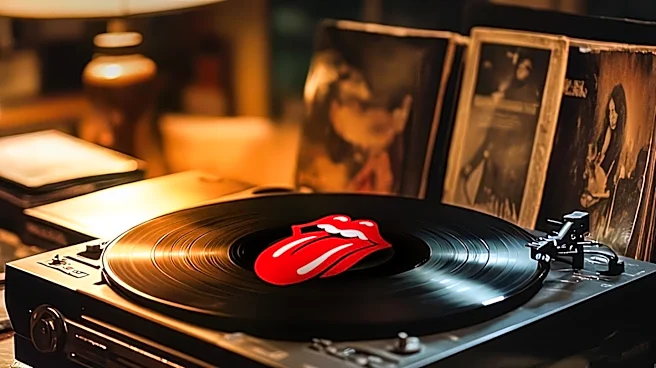
The Rolling Stones
This one might seem obvious, but it’s essential. The Rolling Stones were more than just fans; they were dedicated students who took Diddley's lessons to the global stage. Their cover of Buddy Holly's Diddley-influenced "Not Fade Away" was their first U.S. single, a declaration of their rhythmic allegiance. But it goes deeper than covers. Keith Richards' guitar style—that loose, weaving, rhythm-first approach—is deeply indebted to Diddley's focus on groove over flashy solos. They absorbed his rebellious energy, his bluesy imagery, and his raw authenticity, making it a core part of their own identity. They proved that Diddley's spirit wasn't just a sound; it was an attitude.
PJ Harvey
Polly Jean Harvey's early work, particularly on albums like "Dry" and "Rid of Me," is overflowing with the Diddley spirit. Her guitar playing is visceral and rhythmic, often feeling less like she's playing chords and more like she's wrestling a raw, electric current into submission. Tracks like "Man-Size" possess a guttural, stomping quality that prioritizes rhythmic impact above all else. It's not about replicating the classic beat but about channeling the same raw, unfiltered energy and using the guitar as a percussive weapon. This is the spirit of Diddley reborn in the fury of 90s alternative rock—intense, uncompromising, and built on a foundation of pure rhythmic force.
Jack White
From The White Stripes to The Raconteurs, Jack White has been a tireless champion of raw, elemental rock and roll. His love for the blues is well-documented, but his connection to Bo Diddley is just as profound. It's in his percussive guitar style, his use of primitive gear, and his belief that a song's power comes from its rhythmic core, not its polish. He even demonstrated how to build a diddley bow, the single-string instrument that likely gave Bo his name. In The Raconteurs, he frequently covered Diddley's "Who Do You Love?," but his true tribute is in his own songwriting—a constant reminder that the most powerful music often comes from the most basic, gut-level ingredients.
Johnny Marr
Here’s a curveball. The Smiths' jangly, intricate sound doesn't immediately scream Bo Diddley. But Johnny Marr himself has been open about the influence. He was obsessed with finding infectious rhythms that weren't the standard funk or rock clichés of the era. He found inspiration in the rockabilly and primal drive of Diddley. The famous, otherworldly tremolo of "How Soon Is Now?" was Marr's attempt to capture Diddley's signature guitar effect and propulsive beat, just slowed down to a moody crawl. It’s a perfect example of the Diddley spirit: taking a foundational idea and innovating on it to create something entirely new and unique, which is precisely what Diddley himself did.
Dan Auerbach
As the frontman for The Black Keys, Dan Auerbach has built a career on the kind of gritty, blues-soaked, rhythm-forward rock that Bo Diddley pioneered. The Black Keys’ early sound, in particular, with its minimalist drums-and-guitar setup, relied entirely on the power of a good riff and a heavy groove. Songs from their entire catalog showcase a deep understanding that rhythm is the skeleton of a great rock song. Auerbach's guitar work is raw and direct, carrying the swagger and percussive attack that defined Diddley’s playing. He is a modern torchbearer, proving that the Diddley spirit of stripped-down, high-impact, blues-based rock is timeless and still resonates powerfully today.