



Defining the Uncanny Valley Remake Trap
The “Disney Remake Trap” is a peculiar pitfall of the studio’s own making. It’s the tendency to produce stunningly realistic, yet emotionally hollow, re-creations of animated classics. Driven by a desire to cash in on nostalgia, these films often become
painstaking, shot-for-shot copies that paradoxically lose the magic of the original. The most cited casualty is 2019’s ‘The Lion King,’ a technical marvel that rendered its animal characters with breathtaking realism but stripped them of the very expressions that made the 1994 original so heartbreaking and joyful. When Simba’s face can’t convey anguish as Mufasa falls, the audience is left recalling the emotion of the cartoon rather than feeling it anew. This commitment to photorealism over feeling is the core of the trap—a film that looks real but feels fake.
The Ghosts of Remakes Past
The path to ‘Moana’ is littered with cautionary tales. Beyond ‘The Lion King,’ other remakes have stumbled in different ways. ‘The Little Mermaid’ (2023) earned praise for Halle Bailey’s performance but drew criticism for its murky underwater visuals and changes to the story that felt unnecessary. Critics and audiences debated whether additions to Eric’s backstory or altered song lyrics truly enhanced the narrative or simply padded the runtime. ‘Mulan’ (2020) took a different route, stripping out the musical numbers and the talking dragon, Mushu, in favor of a more serious Wuxia-inspired tone. While a bold choice, it alienated many fans who felt the film lost its charm and personality in the process. These films, while often financially successful, highlight a consistent problem: they struggle to justify their own existence beyond the initial curiosity factor. They are judged not on their own merits, but on how they compare to a beloved, often superior, original.
Why Moana Is Uniquely at Risk
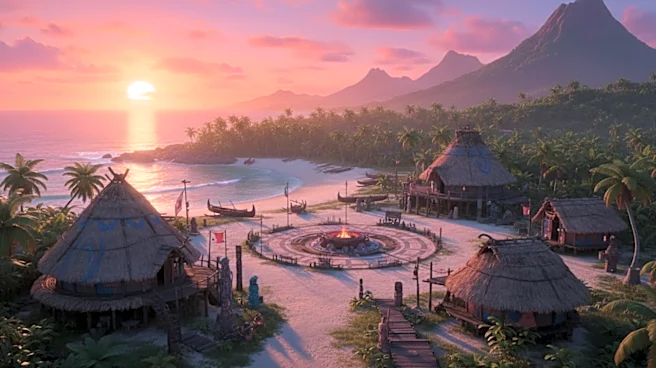
The live-action ‘Moana’ faces a unique set of challenges. Firstly, the original film is only from 2016. The nostalgia is fresh, meaning audiences have the animated version firmly in their minds, making direct comparisons inevitable and potentially harsher. Secondly, Dwayne “The Rock” Johnson, a massive star and the original voice of Maui, is reprising his role on-screen and as a producer. This provides incredible marketing muscle and a comforting link to the original. But it also raises the stakes. Can he recapture the animated character’s larger-than-life energy in physical form without it feeling strange? The film has also cast a newcomer, Catherine Laga‘ia, as Moana. And perhaps the biggest challenge of all is the world itself. The vibrant, magical animation of the ocean as a living character, the glowing Kakamora pirates, and the realm of monsters are central to the story’s appeal. Replicating them in a “realistic” style risks making them look either silly or terrifyingly uncanny, falling right into the Flounder-and-Sebastian trap from ‘The Little Mermaid.’
The Way Forward: Creativity Over Carbon Copy
So, how can ‘Moana’ avoid this fate? The answer lies in embracing creativity rather than replication. Instead of a shot-for-shot remake, the film should use its new medium to expand the world. Give us more insight into the culture of Motunui. Explore the history of the voyagers in a way animation couldn’t. Deepen the relationship between Moana and her family, or give Chief Tui and Sina more complex motivations. The films that have best escaped the trap, like ‘Cruella’ or even Kenneth Branagh’s ‘Cinderella,’ succeeded because they offered a fresh perspective or leaned into the theatricality of live-action. ‘Moana’ doesn’t need to be an origin story, but it does need its own point of view. With Thomas Kail, the director of the Broadway hit ‘Hamilton,’ at the helm, there’s hope for a fresh, dynamic vision. The key will be to use the beloved original as a foundation to build upon, not a blueprint to be traced.