





When you hear 'tweed' or 'jacquard,' a certain image comes to mind—classic, maybe even stuffy. But today's most innovative designers are proving that heritage fabrics are not bound by history, using them to create radically modern shapes.
A Conversation Between Past and Present
In fashion, what’s
old is often made new again, but the current movement is less about revival and more about reinvention. Designers are increasingly turning to traditional textiles not for nostalgia, but for their inherent quality, texture, and storytelling power. Fabrics like Scottish tweed, French brocade, Indian handlooms, and Japanese Shibori-dyed cloth are being viewed as a rich vocabulary rather than a set of rules. This shift is part of a broader desire for authenticity and sustainability in a world saturated by fast fashion. By using these time-honored materials, designers create a dialogue between centuries-old craftsmanship and contemporary life, proving that a fabric with a deep history can still feel completely of the moment. The goal isn't to replicate the past, but to create a thoughtful fusion that feels both meaningful and new.
The Architectural Approach to Heritage
One of the most exciting ways designers are modernizing traditional fabrics is by using them to create architectural and sculptural forms. Stiffer materials like tweed, jacquard, and brocade, once destined for tailored suits and formal gowns, are now being engineered into avant-garde shapes. Think of tweed, a fabric synonymous with countryside estates, being cut into an oversized, boxy blazer with raw edges or a dramatic, asymmetric top. Designers are playing with proportion, using the natural structure of these textiles to build garments that stand away from the body, creating bold new silhouettes. This approach treats the fabric like a building material, focusing on form and structure over ornamentation. Brands like Loewe and the late Karl Lagerfeld for Chanel have shown how a heritage fabric can be continuously reinterpreted to feel sharp, powerful, and utterly contemporary.
A Global Palette of Possibilities
This trend extends far beyond European textiles, embracing a global tapestry of craftsmanship. Designers are integrating traditional fabrics from around the world into high-fashion contexts, moving beyond clichéd 'boho' or 'ethnic' aesthetics. For example, the vibrant, geometric patterns of West African wax prints are being used in precisely tailored European-style suits. Handwoven Faso Dan Fani from Burkina Faso is appearing in structured trousers and modern jackets, celebrated for its unique texture and cultural depth. Meanwhile, designers are also incorporating Indian textiles like Madras checks and khadi into minimalist dresses and separates that work for a global wardrobe. This approach requires a respectful collaboration with artisan communities, ensuring that heritage techniques are preserved while being introduced to new audiences.
Soft Power and Unexpected Pairings
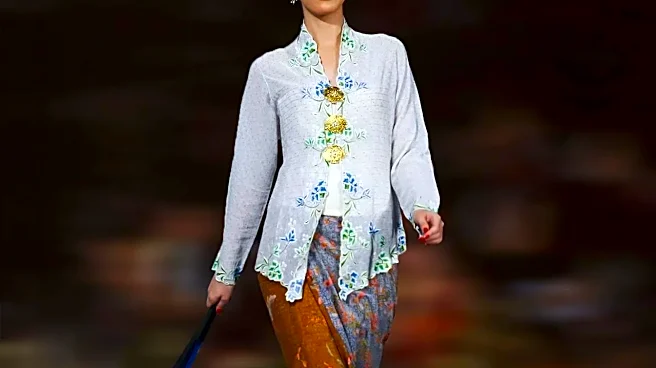
It’s not just about rigid structures. Softer traditional fabrics are also being reimagined. Handwoven silks and cottons, once used for flowing, traditional garments, are now appearing in deconstructed or minimalist forms. But the real magic often happens in the mix. Today's styling is all about contrast. A complex, patterned jacquard skirt, which might feel like it belongs in a museum, is paired with a simple graphic t_shirt and sneakers. A classic tweed blazer is thrown over a pair of jeans or even athletic wear. This high_low approach demystifies the fabric, making it more accessible and versatile. By breaking the old rules and pairing these storied textiles with unexpected, modern wardrobe staples, designers and style leaders show that these fabrics can be part of a dynamic, everyday look, not just reserved for special occasions.