
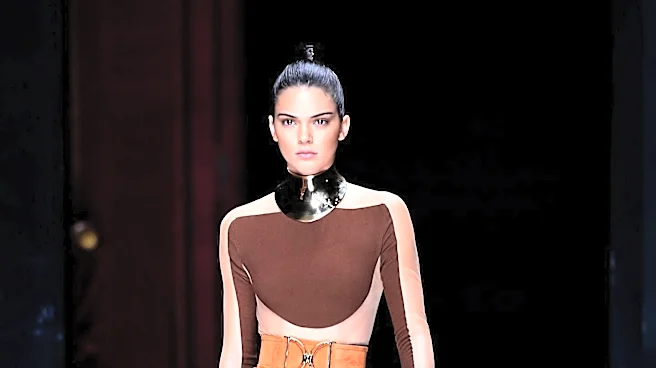
The Myth of the Blank Canvas
For decades, the prevailing logic in high fashion was that a model should be a neutral vessel. The ideal was a tall, thin, and often white figure whose own personality wouldn't 'distract' from the designer's creation. This created a uniform look across
shows, where the primary job of the model was simply to walk without stumbling. That era is fading fast. Today, designers and brands recognize that in a crowded, noisy market, neutrality is a liability. Audiences, especially younger consumers, crave connection and values they can relate to. A face without a story is a missed opportunity to say something meaningful.
Casting for Character, Not Just Clothes
The modern runway is increasingly a platform for personality. Casting directors and designers are now looking for models who bring their own narrative to the clothes. Think of it this way: a tailored power suit communicates something different on a 22-year-old runway newcomer than it does on a 55-year-old industry icon making a celebrated return. The suit doesn't change, but its message does. On the former, it might speak to youthful ambition; on the latter, it can signify enduring power and wisdom. This shift is intentional. Faces and bodies are chosen to symbolize specific traits and attitudes, turning the runway into a mirror of a broader audience. During the Fall/Winter 2026 season, casting directors made a point of featuring models from the late '90s and early '00s, adding a layer of seasoned authority to the collections.
The Runway as a Brand's Mission Statement
A designer's casting choices are now scrutinized as much as their hemlines. The lineup of models walking a show is a powerful, instant broadcast of a brand's values. A runway featuring a wide range of body types, ages, ethnicities, and gender identities tells the world that the brand's vision of beauty is expansive and inclusive. Conversely, a lack of diversity can send a message of exclusion, whether intended or not. This has led to a rise in what's known as 'street casting,' where unique individuals are discovered outside the traditional agency system, bringing a raw authenticity to the runway that can't be manufactured. These 'nodels,' or non-models, often have a personal connection to the designer, making the show feel less like a commercial presentation and more like a community gathering.
How the Model Changes the Garment's Story
Ultimately, the person wearing the garment fundamentally alters its story. A delicate, floral dress might read as purely romantic on a model with a soft, commercial look. But place that same dress on a model with tattoos, a shaved head, and a piercing gaze, and it suddenly communicates a compelling tension between softness and strength. This is where casting becomes a true art form. It's not just about representation for its own sake; it's about using human identity to unlock new layers of meaning in the fabric. The model is no longer just a support for the clothes; they are an active interpreter, and their presence can make a collection feel more authentic, relevant, and emotionally resonant. In an industry that thrives on the new, casting has become the most human way to keep fashion's conversation moving forward.