




Ever pulled a favorite sweater from the wash, only to find it oddly misshapen? Or wondered how tailors create such sharp curves on a lapel? The answer to both lies in the power of steam, which can be a tool for creation or destruction.
The Art of Intentional Shaping
Steam-shaping is
a deliberate, controlled technique used by tailors, knitters, and garment professionals to persuade fabric into a desired form. Think of it as giving fabric a new 'memory'. The process involves applying steam to relax the fibers, gently molding the fabric into a new shape, and then letting it cool and dry to set that shape. This is how a tailor eases a sleeve into an armhole without puckering or puts a permanent, elegant roll on a suit jacket's lapel. For knitters, this process is often called 'blocking', where a finished piece is washed or steamed and then pinned to specific dimensions to even out stitches and define lace patterns. The key here is control; steam is applied gently, often without the iron ever touching the fabric, to make the fibers pliable, not to force them.
The Damage of Accidental Stretching
Stretching a fabric out of form is the unwanted, often irreversible, consequence of mishandling. This happens when the same elements—heat, moisture, and pressure—are applied without control. Common culprits include using an iron that's too hot and dragging it across a delicate knit, which can permanently flatten and distort the fibers. Hanging a heavy, wet wool sweater is another classic mistake; the weight of the water pulls the relaxed fibers downward, resulting in a garment that's several inches longer than it started. Agitation and high heat in a washing machine or dryer can also cause natural fibers like wool and cotton to either shrink or stretch into an unflattering new shape. Unlike deliberate shaping, this is a result of excessive force meeting vulnerable fibers, leading to damage rather than design.
Why Steam Works: The Science of Fibers
The magic behind both shaping and stretching lies in the molecular structure of natural fibers like wool, cotton, and silk. These fibers contain hydrogen bonds that are broken when exposed to the heat and moisture of steam. This causes the fibers to relax and swell, making them temporarily malleable. At this point, the fabric can be coaxed into a new position. As it cools and dries, the hydrogen bonds reform, locking the fibers into their new place. This is why steam can remove wrinkles; it allows the fibers to return to their natural, uncreased state. Synthetic fibers like polyester, on the other hand, are essentially plastics and react differently; excessive heat can melt or permanently 'kill' them into a set shape, a technique sometimes used intentionally but one that can also easily ruin a garment.
Control Is the Crucial Difference
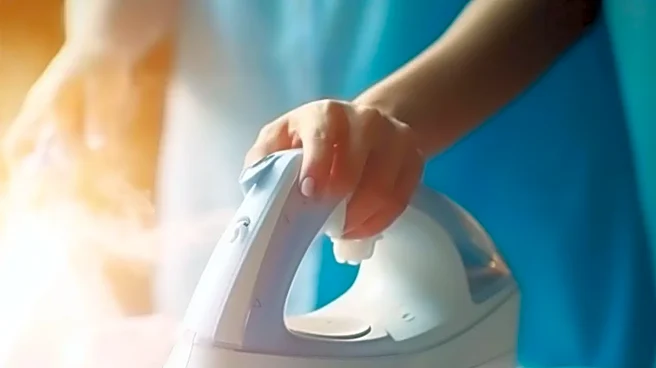
Ultimately, the line between shaping and stretching is defined by one word: control. Steam-shaping is a conversation with the fabric. It involves hovering a steamer or iron, using a light touch, and respecting the material's limits. The goal is to relax the fibers just enough to guide them. Accidental stretching is a shouting match. It’s the result of too much heat, too much pressure from a heavy-handed iron, or the brute force of gravity on a water-logged garment. While both processes use steam to make fibers pliable, one is an act of precision and patience, while the other is an act of force and haste. Knowing which one you're doing is the key to mastering your wardrobe.