
An Audience-First 'Festival of Festivals'
Unlike the industry-driven markets of Cannes or the high-stakes award unveilings at Venice, the BFI London Film Festival has always cultivated a different identity. Founded in 1957, its original mission was to be a 'festival of festivals,' bringing the best
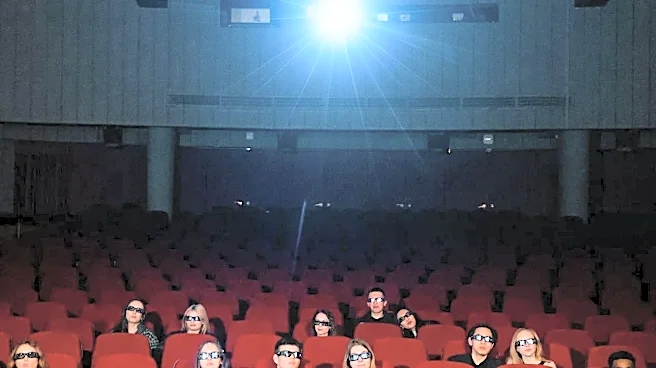
of world cinema to UK audiences. That public-facing ethos endures today. It's less about backroom deals and more about filling London's Southbank with movie lovers. This creates a unique atmosphere where word-of-mouth is king and a film’s buzz is generated not by a marketing machine, but by genuine audience passion. The festival screens hundreds of features, shorts, and series from around the globe, with its program intentionally organized into thematic strands like 'Love,' 'Debate,' and 'Thrill' to encourage attendees to venture beyond the big-name galas and discover something new.
The Breakout Hits of 2026
This year's festival, running from October 7th to the 18th, is a perfect case study. While gala screenings for films like Simon Stone’s 'Elsinore' starring Andrew Scott and Olivia Colman or Jesse Eisenberg’s 'The Debut' with Julianne Moore draw headlines, the real conversations are often sparked by smaller films. Take 'The Liberation', a true story about a woman who joins a cult, which is earning star Carrie Coon early awards buzz for a heart-wrenching performance. Or consider 'Wicker', a dark, fairy-tale satire led by Colman and Alexander Skarsgård that blends silent comedy with social commentary. Then there are international gems like Ryusuke Hamaguchi’s 'All of a Sudden', a three-hour-plus French-Japanese drama about human connection that rewards patient viewers, and 'Hot Water', a quiet American road trip movie about a mother and son that finds profound emotion in small moments. These aren't necessarily the films with the biggest marketing budgets, but they are the ones that define the festival's character.
The Long Tail of Discovery
A red-carpet moment is fleeting, but a true discovery has a long and powerful ripple effect. The BFI London Film Festival has a history of championing films that go on to have significant cultural impact long after the closing credits roll. Its Works-in-Progress showcase, for example, gives an early platform to UK-based filmmakers, connecting them with international distributors and programmers. Success stories from recent years have gone on to win awards at Sundance and Locarno, launching careers in the process. Even the festival's main awards, like the Sutherland Trophy for a first feature, are designed to elevate emerging talent. This focus on nurturing the next generation is the festival's secret weapon. A celebrity can guarantee an opening weekend, but a breakout film discovered at a festival can define a year in cinema and launch the careers of artists who will shape the medium for decades to come.
Why It's More Than Just a London Thing
While rooted in London's Southbank, the festival’s impact extends across the UK and beyond. A selection of festival titles screens at partner venues in major cities, and a curated lineup is available on the BFI Player, making the program accessible to a wider audience. This hybrid model reinforces the idea that the festival is for everyone, not just industry insiders. By prioritizing access and curation, the BFI ensures that the spirit of discovery isn't confined to a few square miles of the capital. It fosters a nationwide conversation around film, reminding us that cinema is a communal art form. The true currency here isn't a famous face on a poster; it's the shared experience of watching a film you'd never have seen otherwise and telling everyone you know that they have to see it too.