






Lead with Culture, Not Just Cleats
The secret weapon for engaging non-soccer fans isn't the offside rule; it's the global party that comes with the game. When teams from Brazil, Japan, Germany, or Nigeria come to town, they bring more than just 11 players. They bring a vibrant culture. Host cities should organize fan zones that are less about tactical analysis and more about cultural immersion. Think dedicated areas in public parks for each day's big matchups, featuring the food, music, and art of the competing nations. Imagine a 'Little Italy' for a day when Italy plays, or a city square transformed into a Brazilian carnaval. This approach shifts the focus from 'you have to love soccer' to 'come experience the world in your own backyard.' It turns a sporting event into a city-wide
cultural festival, accessible and enjoyable for everyone, regardless of their feelings about stoppage time.
Create 'Third Spaces' for Casual Viewing
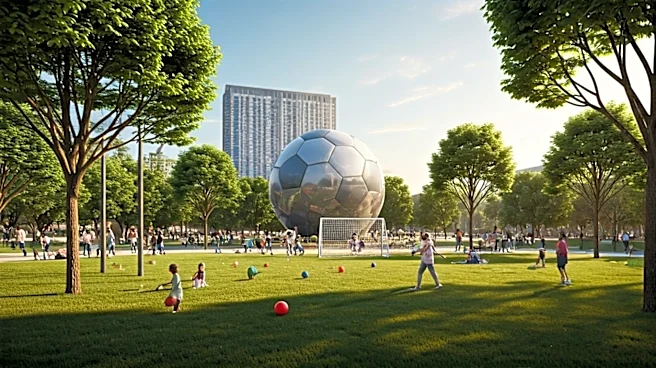
Not everyone wants the intensity of a packed sports bar or the expense of a stadium ticket. To capture the curious, cities need to create low-stakes, highly accessible viewing experiences. These are the 'third spaces'—not home, not work—where community happens organically. This means blanketing public spaces with opportunities to watch. Set up massive screens in parks, at waterfronts, and in pedestrian plazas. Partner with libraries, community centers, and even museums to host family-friendly viewing parties. The key is to make stumbling upon a game as easy as possible. When the barrier to entry is simply 'walking through a park,' people who would never actively seek out a match might find themselves captivated by a last-minute goal or a dramatic penalty shootout. It’s about creating serendipitous moments of fandom.
Make the U.S. Team the Local Team
For many Americans, sports are about local pride. While a World Cup match between France and Argentina is a spectacle, it can feel distant. The solution is to wrap the U.S. Men's National Team (USMNT) in the flag of every host city. This requires a concerted storytelling effort. Cities should work with media partners to create content focused on the American players—their journeys, their struggles, their connection to hometowns across the country. Frame the USMNT as the ultimate home team, representing everyone from Seattle to Miami. By fostering a shared rooting interest, cities can tap into the same powerful psychology that fuels NFL and NBA fandom. When the U.S. plays, it shouldn't just be a soccer match; it should be a collective civic event, uniting the soccer-obsessed and the soccer-agnostic in a common cause.
Demystify the Game Without Being Patronizing
One of the biggest hurdles for potential fans is the perceived complexity of soccer. The rules can seem arcane and the flow of the game unfamiliar. Host cities can address this by launching 'Soccer 101' initiatives. This doesn't mean boring lectures. It could be interactive pop-ups in fan zones where kids (and adults) can learn basic rules through fun drills. It could involve simple, clever on-screen graphics during public viewings that briefly explain concepts like offsides or what a yellow card means. Partnering with local youth soccer clubs to run these clinics can also bridge the gap between the professional spectacle and the community game. The goal isn't to turn everyone into a tactical genius but to give them just enough information to follow the drama and appreciate the skill on display.
Build a Legacy Beyond the Final Whistle
Perhaps the most powerful way to win over skeptics is to prove the World Cup is more than just a month-long party for tourists. Residents want to know: what's in it for us after the trophy is lifted? Host cities must be transparent and ambitious about the tournament's legacy. This means highlighting how investments in public transit, parks, and stadium upgrades will benefit the community for years to come. It means showcasing new and refurbished community soccer fields that will be available for local leagues. Frame the event as a catalyst for urban improvement. When people see the World Cup not as a disruption but as an investment in their city's future, they are far more likely to embrace the excitement and feel a sense of ownership, whether they follow the box scores or not.