





1. The Red Mist in ‘82
Maradona arrived at the 1982 World Cup in Spain as a 21-year-old prodigy, already burdened with the expectation of being the next Pelé. Argentina, the defending champions, faced a brutal second-round group with rivals Italy and Brazil. After being man-marked
and kicked into oblivion by Italy, Maradona’s frustration boiled over against Brazil. Trailing 3-0 with five minutes left, he committed a senseless and violent foul, kicking Brazilian player Batista in the torso. The referee showed him a straight red card. It was a petulant, ugly exit from his first World Cup, and it established a narrative that would follow him forever: unparalleled talent constantly shadowed by an explosive, self-destructive temper.
2. The Hand of God
Four years later, everything changed. In the 1986 quarter-final against England, the game was more than just soccer; it was layered with the raw emotion of the recent Falklands War. Early in the second half, with the game scoreless, a miscued English clearance looped the ball into the air. The 5'5" Maradona leaped with England’s 6'1" goalkeeper Peter Shilton and, in a moment of audacious cunning, punched the ball into the net. The Tunisian referee didn't see it and awarded the goal. After the game, Maradona famously said the goal was scored “a little with the head of Maradona and a little with the hand of God.” It was the ultimate act of gamesmanship—a moment of street smarts and cheating that Argentinians celebrated as divine justice and the English still decry as unforgivable.
3. The Goal of the Century
If the first goal was a crime, the second was a masterpiece that offered immediate, irrefutable absolution. Just four minutes after the “Hand of God,” Maradona received the ball in his own half. He then embarked on a 60-yard, 11-touch slalom run, twisting and gliding past five English players as if they were training cones before rounding the keeper and slotting the ball home. It is widely considered the greatest individual goal in the history of the sport. The two goals, scored minutes apart, are the perfect distillation of Maradona’s duality. One showed his willingness to win by any means necessary; the other showcased a talent so pure it seemed to come from another planet. You cannot understand one without the other.
4. The One-Man World Cup
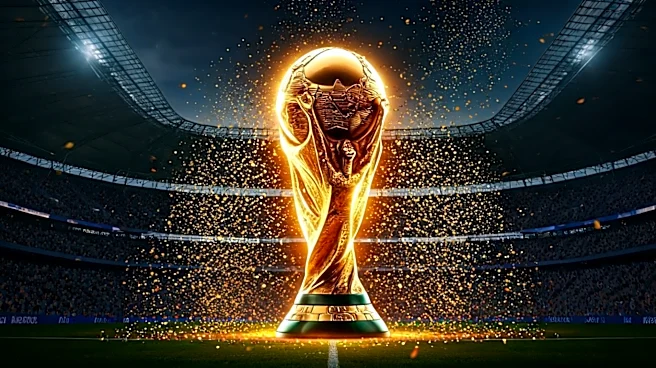
Maradona's performance throughout the 1986 tournament in Mexico is the stuff of legend. He wasn't just the best player; he was the entire narrative. He scored five goals and assisted five more, meaning he was directly involved in 10 of Argentina’s 14 goals. In the semi-final against Belgium, he scored another two magnificent goals, one of which was nearly as good as his solo effort against England. He carried a solid but unspectacular Argentina squad on his back all the way to the final, where they defeated West Germany 3-2. When he lifted that golden trophy, it wasn’t just a team victory. It was the coronation of one man who had bent the world's biggest sporting event to his will. It remains the benchmark for individual dominance in a team sport.
5. The Tragic Fall in ‘94
Maradona’s final World Cup appearance at USA '94 was supposed to be a story of redemption. After years of battling addiction and a 15-month ban for cocaine use, a leaner, meaner-looking Maradona led Argentina in their opening match against Greece. He capped a brilliant team move with a thunderous goal and celebrated by screaming maniacally into a sideline camera—an image of pure, terrifying intensity. But the comeback was a mirage. After Argentina's next match, he was randomly selected for a drug test and tested positive for ephedrine, a banned stimulant. He was unceremoniously kicked out of the tournament. It was a pathetic, heartbreaking end to his international career, confirming that the demons he fought off the field had finally defeated the genius he displayed on it.