




The Real Problem: It's All About Length
You can spend thousands on a suit made from the finest wool, with a cut designed by a legendary Italian house. But if the sleeves are too long and the trousers are puddling around the ankles, you might as well be wearing a rental. This single issue—incorrect
length—is the number one culprit that undermines an otherwise great look. It’s the visual equivalent of a typo in a resume; it suggests a lack of attention to detail and care. While fit across the shoulders, chest, and waist is foundational, the eye is immediately drawn to the endpoints of the garment: the cuffs and the hems. When they’re wrong, they throw off the entire proportion of the suit, making the wearer look shorter, sloppier, and like they’re playing dress-up in their father’s clothes. It's the mistake that screams 'first suit' or 'borrowed suit,' even if it’s a four-figure luxury item.
Decoding the Sleeve Rule
The rule for jacket sleeves is deceptively simple but incredibly powerful. A properly tailored jacket sleeve should allow about a quarter-inch to a half-inch of the shirt cuff to be visible. That’s it. This sliver of fabric works magic for three reasons. First, it creates a clean, deliberate transition from the suit to your hands, elongating the arm line. Second, it adds a pop of contrast—usually the white or light blue of the dress shirt—that breaks up the solid block of the suit fabric, adding visual interest. Finally, and most importantly, it’s a clear signal of intention. It shows you didn’t just grab the suit off the rack and walk out. It proves you took the time to have it finished properly. When the jacket sleeve is too long, hiding the shirt cuff entirely, the arm looks like a solid, undifferentiated tube. It makes a crisp dress shirt pointless and erases a key detail that separates the well-dressed from the merely clothed.
Fixing the Trouser 'Break'
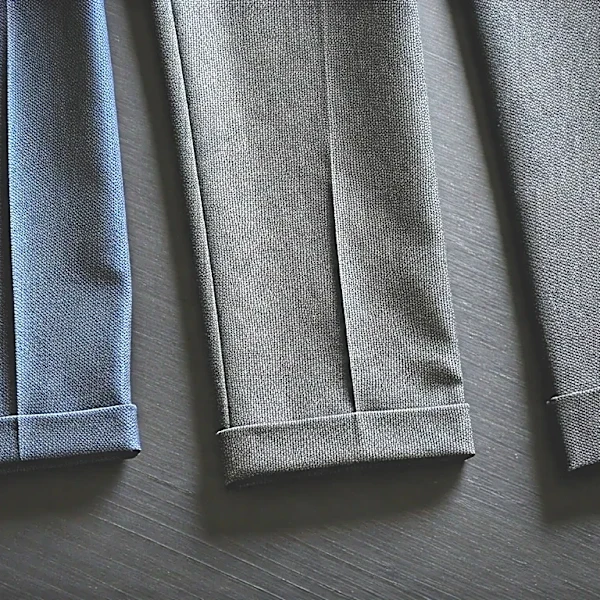
The other half of the length equation is the trouser hem. How your trousers fall onto your shoes is called the “break.” It refers to the horizontal crease that forms in the fabric at the ankle. There are three main styles: no break (the hem just kisses the top of the shoe), a slight or medium break (one subtle crease), and a full break (a deep, pronounced fold). The mistake that makes a suit look cheap and rushed is an excessive break, where the fabric stacks up and pools over the shoe, creating multiple messy folds. This 'puddling' effect visually shortens the leg and makes a clean, expensive pair of dress shoes look clunky. For 99% of men, a slight break is the sweet spot. It maintains a clean, vertical line down the leg while still looking traditional and appropriate for any setting. It’s a modern, sharp, and universally flattering look that avoids the sloppiness of a full break and the overly trendy feel of a high-water 'no break' style.
How to Talk to Your Tailor
The best part is that this is the easiest and cheapest fix in all of tailoring. You just need to know the right words. When you go to a tailor, wear the dress shoes you plan to wear most often with the suit, and put on one of your typical dress shirts. For the jacket, simply say, “I’d like to show about a half-inch of my shirt cuff.” The tailor will know exactly what to do. For the trousers, say, “I’d like a slight break, please.” They will pin the hem so that it rests gently on the top of your shoe with a minimal fold. Don't be passive. Look in the mirror and confirm the length looks right to you. This simple, five-minute conversation transforms a suit from a generic garment into a piece of clothing that is truly yours. It costs very little but adds immense value, ensuring your investment pays off in how you look and feel.