






Argentina vs. Brazil: The Dance of Giants
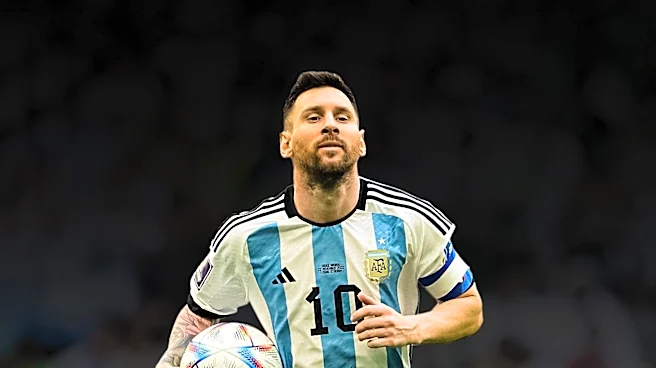
Forget politics or war. The rivalry between Argentina and Brazil is about one thing: football supremacy. Called the "Superclásico de las Américas," it's a battle for the soul of South American soccer. On one side, you have the flair and fire of Argentina,
a nation that gave the world Diego Maradona and Lionel Messi. On the other, the joyous, rhythmic "Joga Bonito" of Brazil, the land of Pelé and Neymar. This isn't a rivalry born from a single conflict but from a century of breathtakingly close competition, with the two titans trading blows for the title of the continent's best. Their meetings are a vibrant, often volatile, clash of styles and philosophies. Argentina historically dominated the head-to-head, but Brazil stormed the global stage, racking up five World Cups to Argentina's three. Each match is a new chapter in an epic debate: whose beautiful game is more beautiful? Who is the true king of South America? There’s no right answer, only 90 minutes to argue the point.
England vs. Germany: History's Long Shadow
Few rivalries are as freighted with history as England versus Germany. While German fans might consider the Netherlands their true nemesis, for the English, this is the ultimate grudge match. The rivalry is rooted in the 20th century's world wars but was cemented on the pitch in the 1966 World Cup final. England's victory on home soil, their only World Cup title, created a national obsession. But what followed was decades of German dominance and English heartbreak, often in excruciating penalty shootouts in 1990 and 1996 that became part of England's national psyche. Matches were often framed by the English press with wartime imagery, turning every game into a symbolic replay of history. Germany became the efficient, clinical machine that England could never quite overcome, leading to the famous quote from English striker Gary Lineker: "Football is a simple game. Twenty-two men chase a ball for 90 minutes and at the end, the Germans always win." The rivalry today is more about mutual respect, but the weight of those past encounters is always present.
USA vs. Mexico: The Fight for North America
For American fans, this is the big one. The USA-Mexico rivalry is a passionate, deeply personal conflict for regional dominance that has evolved from a one-sided affair into a true continental clash. For decades, Mexico was the undisputed king of CONCACAF, dominating the U.S. for over 40 years. But the rise of Major League Soccer and a new generation of American players after the 1994 World Cup, hosted in the U.S., began to shift the balance. The rivalry ignited in the 21st century. The turning point was the 2002 World Cup, where the U.S. stunned Mexico with a 2-0 victory in the knockout stage. That scoreline, "Dos a Cero," became a rallying cry for U.S. fans, especially during a series of qualifying matches held in the freezing cold of Columbus, Ohio. More than just soccer, the games reflect the complex political and cultural relationship between the two neighboring countries, with matches often played in stadiums filled with passionate fans of both sides, turning even "home" games into intense, divided environments.
Netherlands vs. Germany: The Mother of All Grudges
If England's rivalry with Germany is a heated affair, the Dutch feud is a firestorm. Born from the trauma of German occupation during World War II, this rivalry carries a political and cultural weight few others can match. For the Dutch, the foundational moment was the 1974 World Cup final. The Netherlands, led by the legendary Johan Cruyff, were playing a revolutionary style of "Total Football" and were the tournament favorites. They lost the final 2-1 to the host nation, West Germany, a defeat that became an open wound in the nation's psyche. For years, Dutch players admitted their motivation was about more than sport; it was about avenging history. The rivalry reached its ugliest point in the 1990 World Cup with the infamous spitting incident between Frank Rijkaard and Rudi Völler. Though the animosity has cooled since the Dutch finally got their revenge by defeating Germany in the 1988 European Championship semifinal on German soil, the historical echoes remain, making every encounter a reminder of when football was far more than a game.