




Forget haunted houses and knife-wielding maniacs for a moment. This October, the most chilling horror is unfolding in the one place you can't escape: your own mind. A micro-trend is emerging, with films finding terror in the fragile nature of memory.
The Terror of Not Knowing
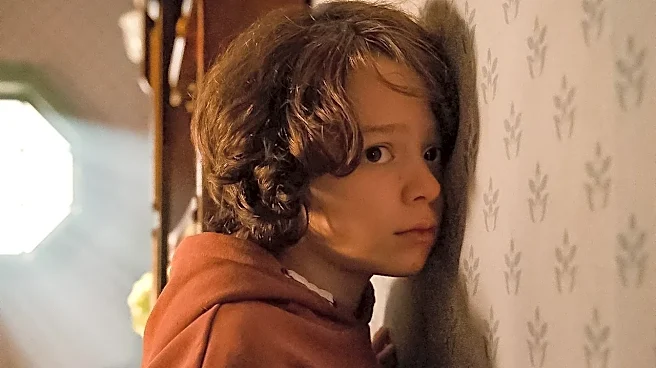
The premise is deceptively simple and utterly terrifying: a protagonist wakes up with amnesia, unable to trust their own thoughts or the people around them. Is the person claiming to be a rescuer actually a friend, or a captor? Is the flashback a genuine memory, or a fabricated nightmare? This is the fertile ground of unreliable memory horror, a subgenre that trades jump scares for a slow-burning psychological dread. Unlike a traditional monster movie where the threat is external and clear, these films turn the hero's own consciousness into the primary antagonist. The horror isn't just about surviving a killer; it's about trying to solve the mystery of your own identity while your most essential tool—your mind—is actively failing you or, even worse, being manipulated by outside forces.
This Season's Unforgettable Amnesiacs
This theme is crystallizing in a handful of recent and upcoming releases that feel perfectly timed for the Halloween season. Look at the recent sci-fi horror film "Affection," where Jessica Rothe's character faces a reality where she doesn't recognize her own husband or child. Her memory loss is compounded by violent seizures that continually reset her mind, creating a brutal loop of confusion and fear. Then there's the buzz around "Ash," which sees an astronaut awaken on a strange planet with her crew dead and no memory of what happened. She's forced to decide whether to trust the mysterious man who arrives to rescue her, turning survival into a high-stakes psychological guessing game. These films prove that a gash in one's memory can be more terrifying than any physical wound.
A Horror for Our Anxious Times
So why is this theme resonating so strongly right now? Because it mirrors a distinctly modern anxiety. We live in an age of digital gaslighting, deepfakes, and rampant misinformation, where the very concept of a shared, verifiable reality feels increasingly unstable. The fear of being manipulated, of having your perception of events challenged and warped, is no longer just a cinematic plot device; it's a daily cultural reality. Horror has always been a reflection of the anxieties of its time. The giant atomic monsters of the 1950s reflected nuclear fears, while the slashers of the 80s mirrored concerns over societal decay. Today's horror of the mind reflects our fear that truth itself is subjective and easily corrupted, and that we can be made to doubt the evidence of our own eyes and memories.
More Personal Than a Slasher
What makes this micro-trend so effective is its intimacy. A masked killer is a threat you can potentially fight or flee from. But how do you fight your own brain? The terror is deeply personal and claustrophobic. It taps into the universal fear of losing control, not of our surroundings, but of ourselves. The questions these films pose are existentially horrifying: If you lose your memories, are you still you? If someone can edit your past, can they erase your future? This moves beyond the simple fear of death to the more complex terror of the dissolution of self. It’s a quiet, insidious horror that lingers long after the credits roll, making you question every fuzzy memory and moment of déjà vu.